Table of Contents
Eco-friendly school initiatives are about more than just recycling and conserving energy. They are an opportunity to instil a green culture within the education system and encourage students to develop sustainable habits for life. By integrating environmental awareness into the curriculum, schools become powerful arenas for education for sustainable development, shaping not only the minds but also the values of young learners.

Students engaged in sustainability projects can see the immediate impact of their actions, whether they’re nurturing plants in a school garden or spearheading campaigns for sustainable consumption. These hands-on experiences help to reinforce the importance of environmental stewardship and provide practical skills that last well beyond their school years. Moreover, through initiatives like school-wide recycling drives or renewable energy projects, entire school communities come together to forge a stronger, more sustainable future.
“Sustainability should be more than just a buzzword in schools; it’s about integrating eco-friendly practices in a way that resonates with every student,” suggests Michelle Connolly, LearningMole’s founder and a seasoned educational consultant with a wealth of classroom experience.
Building a Green School Culture
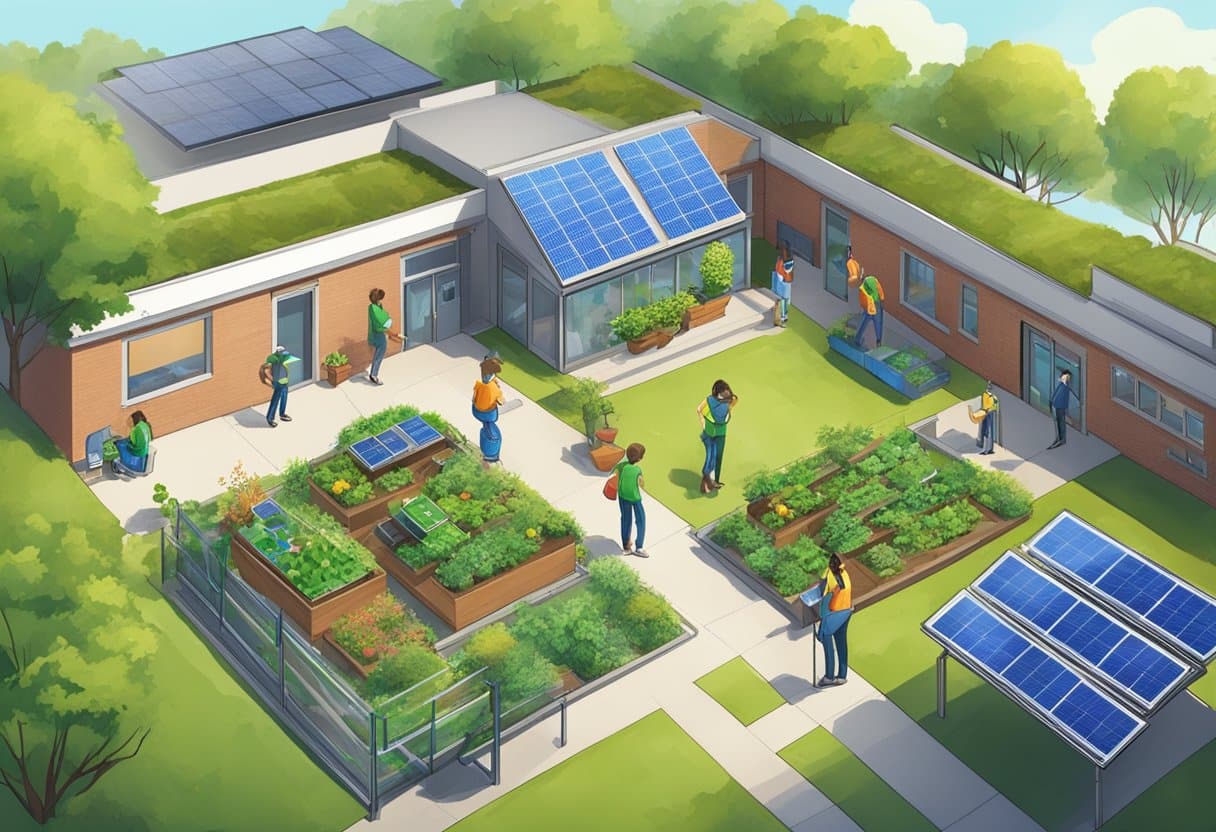
To create a green school culture, sustainable practices must be intertwined into the very fabric of school life, from the curriculum to everyday activities.
Fostering Environmental Stewardship
Environmental stewardship begins with education. As a teacher, by incorporating sustainability into your lessons, you lay the foundation for students to understand their role in the environment. “It’s about giving them the knowledge and tools to make a difference,” shares Michelle Connolly, an expert with over 16 years in the classroom. Empower students through hands-on projects that illustrate the impact they can have, like planting a school garden or conducting energy audits.
Creating Eco-Clubs and Green Teams
Eco-clubs and green teams are a fantastic way for students to take ownership of their school’s environmental initiatives. Here, students collaborate with teachers and other stakeholders in driving forward programs like recycling drives or composting. Being part of such groups gives students real responsibilities and develops leadership skills.
Involving Parents and Local Communities
Engaging parents and local communities is crucial in amplifying the reach of your green school culture. Organise events like eco-fairs or sustainability workshops to get them involved. When local communities participate, they can share practical knowledge and resources—a process that not only supports your school’s green initiatives but also strengthens community ties.
Remember, building a green school culture is a collective journey that requires everyone’s participation. By fostering stewardship, creating dedicated teams, and involving the wider community, you’re not just teaching young people about sustainability; you’re inspiring a whole generation.
Incorporating Sustainability into the Curriculum
A curriculum enriched with sustainability concepts prepares students for the challenges of tomorrow. For teachers, this means creating lesson plans that integrate environmental education, applying social studies to real-world sustainability issues, and developing hands-on projects to enhance critical thinking skills.
Developing Lesson Plans
When crafting lesson plans that incorporate sustainability, your focus should be on interweaving environmental principles with traditional subjects. For example, a maths lesson could involve calculating carbon footprints, teaching both mathematical skills and environmental awareness. Michelle Connolly, a seasoned educational consultant, suggests, “Look for opportunities within your schemes of work where sustainability naturally aligns with the learning objectives. That’s where the most meaningful student learning happens.”
Environmental Education in Social Studies
Within social studies, sustainability can be a powerful tool to make topics like economics, history, and geography more relatable. Encourage students to explore how historical decisions have shaped the current ecological landscape. This, in turn, fosters a deeper understanding of social responsibility toward environmental stewardship.
Hands-On Projects for Critical Thinking
Finally, hands-on activities often lead to the development of critical thinking skills. Design projects where students can create eco-friendly products or audit the school’s energy use. Teacher-led discussions following these activities can help students reflect and further their understanding of sustainability impacts.
By actively engaging in sustainability education, you’ll provide students with the pedagogy and knowledge to make informed decisions for the betterment of our environment.
Advancing Eco-Friendly Practices
Engaging students in eco-friendly practices is critical to pursuing a more sustainable future. This section explores actionable steps schools can take to foster environmental responsibility.
Reducing Paper and Plastic Use
Reducing paper and plastic consumption within schools is a powerful starting point. You can make headway by encouraging digital assignment submissions, thus minimising paper waste. Additionally, schools can institute a policy for the use of reusable containers for lunches, cutting down on single-use plastics.
Promoting Recycling and Composting
An effective recycling programme is vital in managing school waste. Implement designated bins for recyclables and organic waste in every classroom and ensure everyone knows what goes where. Composting food scraps from the canteen can dramatically decrease the amount of waste while also providing a rich resource for school gardens.
Climate Change Awareness
Climate change is a pressing issue, and schools are uniquely positioned to educate. Embed climate change education into the curriculum to arm students with knowledge. Initiatives like energy conservation days or involvement in climate-aware projects can have a lasting impact, encouraging students to transition to more eco-friendly lifestyles.
Michelle Connolly, founder of LearningMole, asserts, “Sustainable practices in education encourage a deeper understanding and create a platform for students to enact real-world change.” Your efforts to integrate these practices will help reduce waste and empower the next generation to lead a more eco-conscious life.
Engagement in School Gardens and Agriculture
School gardens and agricultural activities provide practical opportunities for you to immerse yourself in environmental sustainability. These projects can instil a stronger sense of responsibility and connections to the natural world.
School Garden Planning and Planting
Thorough preparation is key when planning a school garden. First, decide what you wish to grow based on the climate, soil, and space available. Next, engage students in preparing the beds, selecting seeds, and designing layout patterns that will maximise growth. Students need to understand the process from soil preparation to plant care.
Michelle Connolly, founder of LearningMole and, has significant classroom experience suggests, “Involving students in every step of planning and planting a garden reinforces their sense of ownership and pride in watching their efforts come to fruition.”
Learning About Agriculture and Natural Resources
Through agriculture education, you can learn about farming’s wider impact on natural resources. Discussing topics such as water conservation, crop rotation, and sustainable farming practices brings awareness of how eco-friendly agriculture can be made.
Practical sessions that could involve planting native species, learning about pollinators, or running a composting project encourage direct interaction with these concepts. “Hands-on experience is indispensable when learning about agriculture,” says Michelle Connolly, “as it provides real-life context to the importance of preserving natural resources.”
Realising the Arts in Sustainability

Integrating art into sustainability efforts brings a valuable perspective that makes environmental action more accessible and engaging for students. This approach not only sparks creativity but also promotes practical recycling.
Art and Creativity in Recycling
Recycling isn’t just a mundane process; it’s an opportunity for imagination and innovation. Art projects that utilise recycled materials transform what would be waste into something beautiful and useful. Initiatives like creating recyclable sculptures or crafting stationery from recycled paper demonstrate the endless possibilities of repurposing materials.
“Every piece of recycled paper is a blank canvas for creativity and a step towards a more sustainable future,” says Michelle Connolly, founder and educational expert with a diverse background. These activities teach you that recycling goes beyond just being eco-friendly—it’s a canvas for expressive, impactful artwork.
Exploring how recycled materials can be used in art helps you develop a deeper understanding of sustainability. This hands-on experience helps you realise the value of materials that would otherwise be discarded, fostering an enduring respect for the environment.
Leveraging Technology and Innovation
Progressive schools are now integrating cutting-edge technology and innovation to push the boundaries of education and sustainability. By harnessing renewable resources, such as solar energy, and promoting recycling through convenient stations, educators are providing hands-on learning experiences that instil the importance of eco-friendliness in young minds.
Renewable Energy in Education
Renewable energy in education isn’t just a concept; it’s a practical application that illuminates the path to a sustainable future for students. As Michelle Connolly notes, “Introducing renewable energy within schools creates a culture of environmental stewardship.” With the rise of educational platforms like LearningMole, students can explore how renewable resources power our world through interactive learning modules that demystify complex scientific principles.
Implementing Solar Panels and Recycling Stations
Schools are not just using solar panels as a clean energy resource but also as valuable teaching tools. Students can observe how photovoltaic cells convert sunlight into electricity, fostering a deeper understanding of physics and engineering. Meanwhile, recycling stations serve as tangible reminders of our daily impact on the planet. They encourage pupils to take an active role in waste management, reinforcing lessons on environmental conservation:
- Solar Panels: A practical example of harnessing renewable energy.
- Recycling Stations: Promote responsible waste disposal.
These initiatives reflect the shifting landscape of education where innovation drives learning, complementing the dedication of platforms such as LearningMole to prepare youth for a brighter, greener future.
Sustainability Beyond the Classroom
In your pursuit of a greener tomorrow, extending sustainability efforts beyond the classroom walls transforms students into proactive environmental stewards.
Field Trips to Cultivate Environmental Stewards
Field trips play a crucial role in environmental education. By stepping outside the traditional learning space, you afford students hands-on experiences in varied ecosystems. For instance, visiting a local wetland offers a tangible lesson on biodiversity and ecosystem interdependence. These outings underscore the reality of environmental challenges and inspire a sense of guardianship over nature.
Linking with Businesses and Higher Education
Partnerships with businesses and higher education institutions can provide invaluable resources for your sustainability initiatives. Collaborating with local entrepreneurs who practice eco-friendly operations can offer a practical viewpoint on sustainable business. Moreover, connections with universities open doors to advanced research, internships, and mentorship programmes, culminating in a richer, more holistic approach to environmental stewardship.
“True education involves taking the learning beyond textbooks, and these collaborations are a testament to that,” shares Michelle Connolly, a pioneer in educational strategies with over a decade and a half of classroom expertise. Through these partnerships, the bond between students and their community is strengthened, fostering a network of commitment to sustainability efforts.
Encouraging Sustainable Consumption
In today’s environmentally conscious landscape, educational institutions must promote eco-friendly habits among students. This includes fostering an approach to consumption that aligns with sustainable development goals, minimising the use of single-use plastics, and advocating for minimal packaging to reduce our collective carbon footprint.
Minimising Single-Use Plastics
Reducing reliance on single-use plastics is at the heart of sustainable consumption within schools. These non-biodegradable materials contribute significantly to environmental pollution. Introducing reusable water bottles and food containers can be an effective step towards this goal. “It’s about making small changes that can lead to a big impact,” says Michelle Connolly, an expert in the field of education with 16 years of classroom experience. Your school can set an example by providing facilities for students to refill water bottles, thus lessening the need for plastic ones.
Advocating for Minimal Packaging
Encouraging the use of minimal packaging can be another powerful way to practice sustainable consumption. Less packaging means a reduction in waste generation and a smaller carbon footprint. Schools can take the lead by choosing supplies that come with reduced or eco-friendly packaging and educating about the benefits of this choice. As Michelle Connolly elaborates, “Educational settings have the power to instigate real change, influencing the buying habits of our future generations.”
Students become more aware of sustainable practices through concrete actions, like holding workshops on waste reduction and initiating classroom projects that emphasise repurposing materials. This hands-on learning aligns with the positive impact that schools aim to achieve in nurturing environmentally conscious individuals.
Addressing Environmental Challenges
In your quest to create more eco-friendly schools, tackling specific environmental challenges head-on with focused initiatives is important. These range from developing climate-ready systems to implementing effective waste reduction strategies.
Climate-Ready Initiatives
Climate change significantly challenges the natural environment and affects air quality. To address this, Climate-Ready Initiatives focus on enhancing the resilience of school infrastructures to withstand extreme weather conditions. For instance, the introduction of green roofing systems in schools can regulate building temperatures and absorb rainwater, effectively reducing the impacts of urban heat islands.
Michelle Connolly, an educational consultant with an extensive background in classroom innovation, remarks, “Incorporating climate-resilient methods into school curricula empowers students to think critically about sustainability.”
Waste Reduction Strategies
Reducing waste is critical in combatting environmental degradation. Waste Reduction Strategies can significantly improve a school’s contribution to a healthier planet. Implementing recycling and composting programs along with the use of eco-friendly materials in educational resources are vital steps.
Key Actions to reduce waste include:
- Implementing Recycling Bins: Placing clearly labelled bins around the school encourages students to recycle.
- Going Paperless: Transitioning to digital assignments and notifications to minimise paper usage.
- Educational Campaigns: Hosting workshops about the importance of reducing waste to foster a culture of sustainability among students.
“Adopting simple yet effective waste reduction measures not only cleans up our school grounds but also instils a sense of environmental responsibility in our students,” says Michelle Connolly, whose expertise in environmental science makes her a valuable resource when seeking to engage young learners in eco-activities.
Funding and Resources for Eco-Initiatives

Securing appropriate funding and tapping into global support networks are essential steps for schools to create a more sustainable educational environment. Let’s explore how you can obtain these vital resources.
Securing Grants and Funding
Grants are a primary source of funding for eco-initiatives in schools. Begin by researching grant opportunities from governmental bodies, environmental NGOs, and corporations committed to sustainability. A well-designed project proposal that outlines the school’s objectives and the educational impact of the eco-initiative can significantly increase your chances of success. Ensure that the proposal articulates the benefits to students, such as fostering their development into global citizens and enhancing Education for Sustainable Development (ESD).
Tips for Grant Applications:
- Be Specific: Clearly define the environmental outcomes and educational goals.
- Tailor Applications: Adapt your proposal to align with each grantor’s criteria.
Michelle Connolly, founder of LearningMole, emphasises the importance of specificity in applications: “Clear, targeted proposals reflect a deep understanding of both the school’s needs and the grantor’s vision, ensuring that funding is more likely to be secured.”
Resources and Support from UNESCO and the United Nations
The United Nations, through UNESCO’s Associated Schools Network, provides resources and support for eco-schools aiming to implement ESD and create a new generation of environmentally conscious global citizens. They offer guidance materials, case studies, and opportunities for international collaboration. By joining this network, your school can access a global platform for sharing best practices and creating joint initiatives.
How to Collaborate with Global Organisations:
- Engage with UNESCO: Access their myriad resources on sustainability education.
- Connect Globally: Participate in events like World Environment Day to showcase your school’s commitment to eco-initiatives.
By leveraging these avenues, your school becomes part of a larger effort to safeguard the environment while enriching your students’ learning experience with a global perspective.
Frequently Asked Questions
In this section, you’ll discover practical and engaging ways to bring environmental sustainability into schools, tailor curricula around it, and encourage students to contribute to their communities actively.
What are effective sustainability projects for primary and secondary school students?
School gardens are excellent for primary school students, for they provide a tangible connection to the concepts of growth and sustainability. Secondary school students can benefit from energy conservation projects, examining the school’s energy use and proposing efficiency measures. “Active participation in these projects embeds essential knowledge while fostering responsibility,” says Michelle Connolly, an educational expert with 16 years of experience.
How can we integrate sustainability into school curricula to engage students?
Curricula integration can be done by including topics such as renewable energy and waste management in science and geography lessons. Embedding sustainability in existing subjects makes the topic relevant and accessible. Michelle Connolly, founder of LearningMole, advocates for “hands-on experiences that help students make real-world connections.”
What practical steps can schools take to become more eco-friendly?
Schools can start recycling programs, encourage bike-to-school days, and switch to digital handouts to reduce paper use. Additionally, installing solar panels and energy-efficient lighting are impactful steps toward creating a greener school.
In what ways can students actively promote sustainability within their communities?
Students can participate in community clean-up days or start a local awareness campaign on single-use plastics. Michelle Connolly suggests that encouraging participation in these community initiatives gives students “a sense of ownership and pride in their environmental contributions.”
How can a sustainability plan be developed and implemented in a school setting?
Firstly, establish a green team comprising students, staff, and parents. This team can assess the current environmental footprint, set sustainability goals, and track progress. Ensuring the whole school is behind the initiative is vital for successful implementation.
What creative activities can involve students in environmental sustainability at school?
Art projects using recycled materials or science fairs with a focus on sustainability innovations are creative ways to involve students. Michelle Connolly states, “Incorporating creativity in sustainability helps to engage a wider array of students and maintains their interest.”
<p>The post Eco-Friendly School Initiatives: Inspiring Student-Led Sustainability Efforts first appeared on LearningMole.</p>




