Table of Contents
America’s National Anthem: From the roar of the crowd at a presidential inauguration to the hushed reverence of a military funeral, the strains of “The Star-Spangled Banner” resonate deeply within the American psyche. It’s more than just a song; it’s a symbol of national identity, a powerful expression of patriotism, and a poignant reminder of the nation’s history.
While the soaring melody and the familiar first verse are instantly recognisable, the complete poem, including its less-sung stanzas, offers a richer and more nuanced understanding of the anthem’s origins and its enduring significance.
While the familiar first verse of The Star-Spangled Banner is widely known, the complete poem, including its less-sung stanzas, offers a deeper understanding of Francis Scott Key’s inspiration and the historical context surrounding its creation. This article comprehensively composes authentic lyrics, exploring their evolution, variations, and enduring significance.
We will delve into the historical context that gave birth to the anthem, examine each of the four stanzas in detail, trace the song’s evolution over time, address common misconceptions surrounding the lyrics, and explore the enduring power of the Star-Spangled Banner as a symbol of American identity.
The Genesis of a National Anthem (The Historical Context)

The War of 1812
The War of 1812, a conflict between the United States and Great Britain, played a crucial role in shaping American identity and solidifying the nation’s independence. The war fought largely at sea and along the American frontier, tested the young republic’s resilience and its ability to defend its sovereignty. It was a period of intense national feeling, marked by both triumphs and setbacks, and it ultimately contributed to a growing sense of American nationalism. The war also highlighted the importance of a strong national symbol, something that could unite the diverse population and express the shared values and aspirations of the nation.
The Battle of Fort McHenry
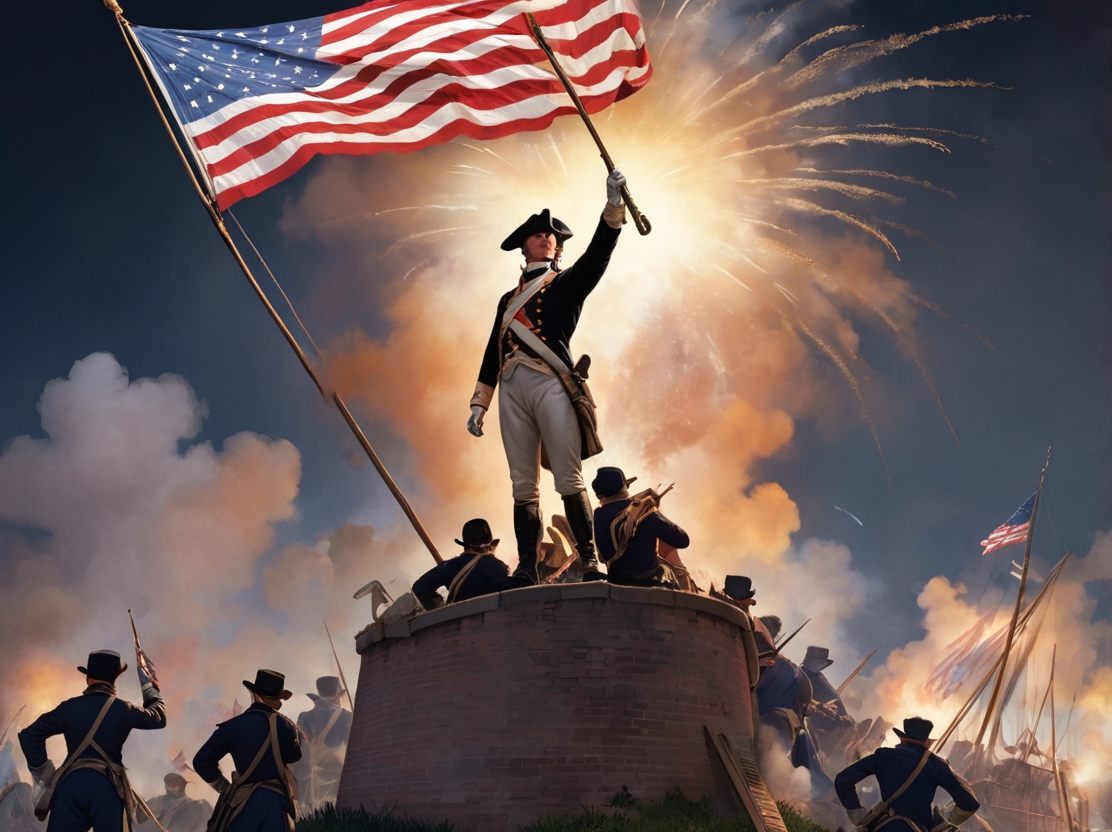
The specific event that inspired Francis Scott Key’s poem was the Battle of Fort McHenry, which took place in Baltimore, Maryland, on the night of September 13-14, 1814. British naval forces bombarded the fort relentlessly, attempting to break its defences and gain control of the city. The fate of Baltimore, and indeed the outcome of the war, seemed to hang in the balance.
The bombardment lasted for hours, illuminating the night sky with the flashes of cannon fire and the bursting of shells. Amidst the chaos and uncertainty, one observer watched with particular interest: Francis Scott Key.
Francis Scott Key’s Inspiration
Francis Scott Key, a lawyer and amateur poet, was on a British ship negotiating the release of an American prisoner. He witnessed the bombardment of Fort McHenry firsthand, a spectacle of both destruction and resilience. As dawn approached, Key anxiously scanned the horizon, hoping to see the American flag still flying over the fort.
When the smoke cleared and the flag, tattered but still waving, came into view, Key was overcome with emotion. He was inspired to write a poem capturing the drama of the battle, the resilience of the American defenders, and the enduring spirit of the nation. His poem, originally titled “Defence of Fort M’Henry,” was quickly set to the tune of a popular British drinking song, “To Anacreon in Heaven,” and it soon became a patriotic anthem, eventually evolving into the Star-Spangled Banner we know today.
Key’s personal experience witnessing the bombardment, combined with his patriotic fervour, fueled the creation of a national symbol that continues to resonate with Americans centuries later.
The Complete Poem: Unveiling All Four Stanzas (A Literary Exploration)

Stanza 1
O say can you see, by the dawn’s early light, What so proudly we hailed at the twilight’s last gleaming? Whose broad stripes and bright stars through the perilous fight, O’er the ramparts we watched were so gallantly streaming? And the rockets’ red glare, the bombs bursting in the air, Gave proof through the night that our flag was still there. O say, does that star-spangled banner yet wave O’er the land of the free and the home of the brave?
This opening stanza, the most familiar, paints a vivid picture of the scene at Fort McHenry. The “dawn’s early light” and “twilight’s last gleaming” frame the narrative, emphasizing the passage of time during the bombardment. The “broad stripes and bright stars” of the American flag are central, representing the nation’s identity and resilience. The “rockets’ red glare, the bombs bursting in air” capture the intensity of the attack, creating a dramatic and suspenseful atmosphere.
The rhetorical question, “O say, does that star-spangled banner yet wave,” expresses the uncertainty and anxiety of the observer, while also conveying a deep hope for American survival. The final line, “O’er the land of the free and the home of the brave,” encapsulates the core values of the nation, linking freedom and bravery to the flag and the land it represents.
Stanza 2
On the shore dimly seen through the mists of the deep, Where the foe’s haughty host in dread silence reposes, What is that which the breeze, o’er the towering steep, As it fitfully blows, half conceals, half discloses? Now it catches the gleam of the morning’s first beam, In full glory reflected now shines in the stream: ‘Tis the star-spangled banner! O long may it wave O’er the land of the free and the home of the brave!
This stanza shifts the focus to the British forces, described as a “haughty host” resting in “dread silence” before the attack. The “mists of the deep” create an air of mystery and uncertainty, while the “towering steep” likely refers to the heights of Fort McHenry. The imagery of the flag “half concealed, half disclosed” by the breeze adds to the suspense, mirroring the uncertainty of the battle’s outcome. The final lines again proclaim the enduring presence of the flag and its symbolic connection to freedom and bravery.
Stanza 3
And where is that band who so vauntingly swore That the havoc of war and the battle’s confusion A home and a country should leave us no more? Their blood has washed out their foul footsteps’ pollution. No refuge could save the hireling and slave From the terror of flight or the gloom of the grave: And the star-spangled banner in triumph doth wave O’er the land of the free and the home of the brave!
This verse directly addresses the enemy’s boasts and predictions of American defeat. The “band who so vauntingly swore” refers to the British forces and their allies. The lines about “havoc of war and the battle’s confusion” emphasize the destructive power of the conflict. The powerful image of “blood has washed out their foul footsteps’ pollution” suggests a sense of righteous victory and the purging of the enemy’s presence. The mention of “hireling and slave” likely refers to British forces that included mercenaries and potentially even enslaved people who were offered freedom in exchange for service.
Stanza 4
O thus be it ever, when freemen shall stand Between their loved home and the war’s desolation! Blest with victory and peace, may heaven rescue land. Praise the Power that hath made and preserved us a nation. Then conquer we must, when our cause is just, And this be our motto – “In God is our trust!” And the star-spangled banner in triumph shall wave O’er the land of the free and the home of the brave!
The final stanza broadens the scope, reflecting on the broader implications of the battle and the future of the nation. The image of “freemen” standing between their homes and “war’s desolation” emphasizes the importance of defending liberty. The lines about “victory and peace” express a hope for a lasting resolution to the conflict.
The reference to “the Power that hath made and preserved us a nation” suggests a divine hand in American history. The motto, “In God is our trust,” though not officially adopted until much later, echoes the sentiment of faith and reliance on divine providence. The concluding lines again celebrate the triumph of the Star-spangled Banner and its enduring symbolism of freedom and bravery.
Variations and Adaptations (A Song’s Evolution)

Early Publications and Musical Settings
Key’s poem was first published as a broadside, a single sheet of paper, shortly after the Battle of Fort McHenry. It quickly gained popularity and was soon set to the tune of “To Anacreon in Heaven,” a popular British drinking song. The combination of Key’s stirring words and the familiar melody proved irresistible, and the song spread rapidly throughout the country.
Changes and Modifications Over Time
While the core lyrics have remained largely unchanged, some minor variations and modifications have occurred over time. These changes often reflect evolving language conventions or attempts to clarify certain phrases. However, the essential message and emotional impact of the poem have remained consistent.
Official Adoption as the National Anthem
Despite its widespread popularity, the Star-Spangled Banner was not officially adopted as the national anthem of the United States until 1931. This formal recognition solidified its place as a symbol of American identity and patriotism.
Common Misconceptions and Errors (Setting the Record Straight)

Misremembered Lyrics
Due to its frequent performance and oral transmission, several misquotes and incorrect versions of the lyrics have become common. These errors often involve slight variations in wording or phrasing, but they can sometimes alter the meaning or impact of the poem.
Misinterpretations of Meaning
Some misinterpretations of the poem stem from a lack of understanding of its historical context. For example, the lines about “hireling and slave” have sometimes been misinterpreted as a defence of slavery when they likely refer to British forces that included mercenaries and potentially even enslaved people offered freedom for service.
Debunking Myths
Several myths and urban legends surrounding the Star-Spangled Banner have arisen. These stories, often embellished over time, can distort the true history of the anthem and its creation. It’s important to rely on credible historical sources to separate fact from fiction and understand the story behind this iconic symbol.
The Enduring Significance (A National Symbol)

The Star-Spangled Banner in American Culture
The Star-Spangled Banner plays a prominent role in American culture, serving as a powerful symbol of national identity and patriotism. It is traditionally performed at the beginning of major sporting events, national holidays, and other public gatherings. The playing of the anthem evokes a sense of unity and shared purpose, bringing Americans together to celebrate their common heritage and values. It is also a fixture at military ceremonies, honouring the sacrifices of those who have served the nation. The anthem’s presence in these diverse settings underscores its importance as a unifying force in American society.
Symbolism and Emotional Impact
The Star-Spangled Banner holds deep emotional significance for many Americans. It represents the nation’s history, its struggles, and its triumphs. The lyrics, with their vivid imagery and powerful message, evoke feelings of pride, patriotism, and hope. The soaring melody, particularly the challenging high notes, adds to the emotional intensity of the anthem. For many, the Star-Spangled Banner is a tangible connection to the values of freedom, bravery, and resilience that are central to American identity. It is a reminder of the sacrifices made by previous generations and an affirmation of the enduring spirit of the nation.
International Recognition
While primarily a symbol of American identity, the Star-Spangled Banner is also recognised and respected internationally. Its melody is familiar to many around the world, and its association with the United States makes it a symbol of American culture and values. The anthem’s message of freedom and resilience resonates beyond national borders, reflecting universal human aspirations.
Modern Interpretations and Performances (A Living Tradition)

Notable Performances
Over the years, the Star-Spangled Banner has had many memorable performances. From Whitney Houston’s iconic rendition at Super Bowl XXV in 1991, which became a symbol of national unity during the Gulf War, to countless other performances by renowned artists, the anthem has been interpreted in diverse and creative ways. These notable performances often reflect the particular moment in history in which they occur, adding new layers of meaning and emotional resonance to the song.
Contemporary Adaptations
Modern musicians have explored various contemporary adaptations of the Star-Spangled Banner, experimenting with different musical styles and arrangements. These reinterpretations, while sometimes controversial, can offer fresh perspectives on the anthem and make it more accessible to contemporary audiences. They also demonstrate the song’s enduring power to inspire creativity and artistic expression.
Controversies and Debates
The Star-Spangled Banner has also been controversial and debated in recent years. Discussions about kneeling during the anthem to protest social injustice have sparked national conversations about freedom of speech, patriotism, and the meaning of the anthem itself. These debates highlight the complex and evolving relationship between the anthem and American society, reflecting ongoing discussions about race, equality, and national identity.
Conclusion (Reflecting on the Anthem’s Power)

The Star-Spangled Banner is more than just a song; it is a powerful symbol of American identity, a living embodiment of the nation’s history, values, and aspirations. From its origins in the War of 1812 to its enduring presence in contemporary culture, the anthem has served as a unifying force, bringing Americans together to celebrate their shared heritage and express their patriotism.
Understanding the complete poem, including its less-sung stanzas, provides a deeper appreciation of Francis Scott Key’s inspiration and the historical context surrounding its creation. The Star-Spangled Banner’s enduring power lies in its ability to evoke strong emotions and connect Americans to their past, present, and future. It is a reminder of the sacrifices made by previous generations and an affirmation of the enduring values of freedom, bravery, and resilience.
As the nation continues to evolve and grapple with its own challenges, the Star-Spangled Banner remains a relevant and powerful symbol, a testament to the enduring spirit of the American people and their ongoing pursuit of a perfect union. The anthem’s ability to inspire, unite, and provoke dialogue ensures that it will continue to play a vital role in American culture for generations.
FAQs
1. What are the authentic words for the Star-Spangled Banner?
The authentic words to Star-Spangled Banner refer to the historical and true lyrics of the American National Anthem.
2. What is meant by discovering Star-Spangled Banner’s comprehensive compilation?
Discovering a comprehensive compilation of The Star-Spangled Banner means finding an entire set of verse lines or lyrics from “O say, can you See” to “The Land of the Free”.
3. Are ‘In God We Trust’ and ‘Land of the Brave’ part of America’s National anthem?
No, ‘In God we trust’ and ‘Land of the brave’ are common phrases associated with America, but they do not appear in the official lyrics of The United States national anthem – Star-Spangled Banner.
4. How does history relate to the Star-Spangled Banner’s authentic words?
The Authentic words tell about its creation story while tracking changes over time, thus providing a window into the history.
5. Why might one want such a comprehensive understanding of this topic?
A complete grasp lets you appreciate how it became a symbol of bravery and freedom commonly sung during special events.
<p>The post America’s National Anthem: A Comprehensive Compilation of Star-Spangled Banner first appeared on LearningMole.</p>