Table of Contents
The Battle of New Orleans: The name itself conjures images of a heroic American victory against overwhelming odds, a ragtag band of patriots led by the charismatic Andrew Jackson decisively defeating the British and securing American independence. This image, firmly embedded in the popular imagination, owes much to the iconic song of the same name, a rollicking tune that paints a vivid, albeit simplified, picture of the conflict. The battle has become a symbol of American resilience and triumph, a cornerstone of national mythology. But the reality of the Battle of New Orleans is far more nuanced, a complex event shaped by strategic considerations, diverse participants, and a touch of historical irony.

One of the most pervasive misconceptions surrounding the Battle of New Orleans is its timing. Many believe it was fought during the War of 1812, a crucial victory that forced the British to the negotiating table. In fact, the Treaty of Ghent, formally ending the war, had already been signed weeks before the battle took place. News of the treaty, however, had not yet reached North America, leaving both sides unaware that the conflict was officially over. This historical quirk adds another layer of complexity to the battle’s significance, raising questions about its actual impact on the war’s outcome.
The song “The Battle of New Orleans,” with its catchy melody and colourful lyrics, has played a crucial role in shaping public perception of the event. The song’s portrayal of Jackson as a larger-than-life hero, leading a diverse force of Americans, including the legendary pirate Jean Lafitte, to a stunning victory against the British regulars, has cemented the battle’s place in American folklore.
While the song captures some elements of the historical event, it also simplifies and romanticises the narrative, contributing to a mythologised understanding of the battle and its place in the War of 1812. The Battle of New Orleans, while a significant American victory, has been heavily romanticised and mythologised, particularly through the popular song, obscuring the complex historical context and contributing to a simplified understanding of the War of 1812’s conclusion.
This article will delve into the true story of the Battle of New Orleans, separating fact from fiction and exploring the complex historical context surrounding this iconic event. It will examine the strategic considerations that led to the battle, the diverse forces involved, the actual course of the fighting, and the battle’s ultimate impact (or lack thereof) on the War of 1812. Furthermore, it will explore the song’s influence on shaping the popular narrative, analysing how it has contributed to the mythologisation of the battle and its key figures.
The War of 1812

The War of 1812, often referred to as the “Second War of Independence,” stemmed from a complex web of grievances between the United States and Great Britain. These included British impressment of American sailors, restrictions on American trade due to the Napoleonic Wars, and British support for Native American resistance on the western frontier. The war, declared by the United States in June 1812, was fought primarily along the border between the U.S. and Canada, as well as at sea. Key events included the American defeats at Bladensburg and Detroit, the burning of Washington D.C., and naval victories on the Great Lakes.
a. Briefly Recap the Causes and Major Events of the War of 1812: The war’s causes were rooted in maritime disputes, particularly the British practice of impressment, where American sailors were forcibly conscripted into the Royal Navy. Trade restrictions imposed by both Britain and France during the Napoleonic Wars also hurt the American economy. Furthermore, British support for Native American tribes resisting American expansion fueled tensions on the frontier. Major events of the war included the American invasion of Canada, which ultimately failed, British naval blockades of American ports, and various battles on land and sea.
b. Explain the Strategic Importance of New Orleans and its Vulnerability: New Orleans held immense strategic importance. It controlled access to the Mississippi River, a vital artery for American commerce, and served as a crucial port for trade with the interior of the continent. Its loss would have severely crippled the American economy and potentially given the British control over vast territories. Despite its importance, New Orleans was also vulnerable. Its defences were not as strong as some other American cities, and its location made it susceptible to attack from both the sea and land.
c. Describe the Diverse Population of New Orleans at the Time (Creoles, free people of colour, etc.): New Orleans in 1814 was a melting pot of cultures and ethnicities. The population included Creoles (descendants of French and Spanish colonists), free people of colour, enslaved Africans, recent American immigrants, and various European communities. This diverse population would play a significant role in the defense of the city, with individuals from different backgrounds contributing to the war effort.
d. Outline the British Objectives in Targeting New Orleans: The British objectives in targeting New Orleans were primarily strategic and economic. They hoped to gain control of the city and the Mississippi River, thereby disrupting American trade and potentially expanding British territory. Capturing New Orleans would have also given them a strong bargaining position in any future peace negotiations. It was a high-stakes gamble aimed at securing a decisive victory in the final stages of the war.
The Military Preparations and Forces Involved

Major General Andrew Jackson orchestrated the defence of New Orleans. He was a tough and determined commander who had distinguished himself in earlier battles of the war. His arrival in New Orleans galvanised the city’s population and spurred preparations for the impending British attack.
a. Andrew Jackson’s Arrival and his Efforts to Organise the City’s Defenses: Jackson’s arrival in New Orleans was a turning point. He quickly assessed the city’s defences and took decisive steps to strengthen them. He established fortifications, organised the city’s diverse population into military units, and implemented martial law to maintain order. His leadership and charisma were essential in uniting the various factions within the city and preparing them for the coming battle.
b. Description of the Diverse American Forces: Regulars, Militia, Volunteers, Pirates, etc.: Jackson’s forces were a heterogeneous mix, reflecting the diverse population of New Orleans. They included regular army troops, Tennessee and Kentucky militia units, Louisiana volunteers, free people of colour, and even a contingent of pirates led by Jean Lafitte. This diverse army, though lacking in some areas of training and discipline, was united by a common determination to defend their city.
c. Overview of the British Forces and their Leadership: The British forces, commanded by Major General Edward Pakenham, were composed of seasoned troops who had fought in the Napoleonic Wars. They were well-equipped and experienced, presenting a formidable challenge to the American defenders. However, Pakenham’s leadership and strategic decisions would ultimately prove to be flawed.
d. Analysis of the Relative Strengths and Weaknesses of Both Sides: The British had the advantage of experienced troops and naval superiority. However, they were unfamiliar with the terrain and faced a determined defence. The Americans, while lacking formal training in some units, had the advantage of fighting on their home ground and were motivated by a strong desire to protect their city. Jackson’s leadership and the diverse composition of his forces proved to be a surprising strength, offsetting some of the British advantages.
The Battle Itself: A Clash on the Plains

The Battle of New Orleans, fought on January 8, 1815, unfolded on the plains outside the city, a clash between seasoned British regulars and a diverse American force. It was a battle marked by both strategic brilliance and sheer luck, ultimately resulting in a decisive American victory.
a. Detailed Account of the Battle: the Timeline, Key Events, and Military Tactics Employed: The battle began with a British assault on the American lines, a heavily fortified position stretching between the Mississippi River and a swamp. The British, attempting a frontal attack, were met with withering fire from the American defenders, who were sheltered behind earthworks and fortifications. Intense artillery exchanges and close-range musket fire characterised the battle. The British suffered heavy casualties in their repeated assaults, while the Americans, protected by their defences, sustained relatively light losses.
b. Focus on the Role of Different Units and Individuals (e.g., Jean Lafitte and his Pirates): The American victory was a result of the combined efforts of various units and individuals. Andrew Jackson’s leadership was crucial in organising and motivating his diverse force. The regular army troops provided a solid core of resistance, while the militia and volunteer units contributed their numbers and determination. Jean Lafitte and his pirates played a significant role, their knowledge of the local terrain and their sharpshooting skills proving invaluable.
c. Description of the Battlefield and the Challenges Faced by Both Sides: The battlefield presented challenges for both sides. The American lines were well-fortified, but the terrain was also difficult, with swamps and the Mississippi River limiting manoeuvrability. The British, attacking across open ground, faced a withering barrage of fire from the American defenders. The lack of cover and the muddy terrain made their frontal assaults extremely costly.
d. Examination of the Casualties and the Extent of the American Victory: The Battle of New Orleans resulted in a stunning American victory. The British suffered heavy casualties, with hundreds killed and wounded, including General Pakenham. The American losses, while not insignificant, were far fewer. The extent of the American victory was not just in the number of casualties inflicted but also in the psychological impact of the battle. It was a resounding defeat for the British, boosting American morale and solidifying their belief in their ability to defend their nation.
The Treaty of Ghent and the War’s End

The Battle of New Orleans, though a significant American victory, had no bearing on the outcome of the War of 1812. The war had officially ended weeks earlier with the signing of the Treaty of Ghent.
a. Explain the Signing of the Treaty of Ghent before the Battle of New Orleans: The Treaty of Ghent, formally ending the War of 1812, was signed on December 24, 1814, in Ghent, Belgium. Negotiations between the United States and Great Britain had been ongoing for some time, and the treaty represented a compromise that addressed some, but not all, of the issues that had led to the war.
b. Discuss the Slow Communication of this News across the Atlantic: In the early 19th century, communication across the Atlantic was slow and unreliable. News of the Treaty of Ghent took several weeks to reach North America, and it was not until well after the Battle of New Orleans that Americans learned that the war had officially ended.
c. Clarify the Battle’s Limited Impact on the Treaty Negotiations: Because the Battle of New Orleans occurred after the signing of the Treaty of Ghent, it had no direct impact on the treaty negotiations. The treaty had already been finalised, and the battle did not alter its terms. However, the American victory at New Orleans had a significant indirect impact. It bolstered American morale and contributed to a sense of national pride, which likely influenced the reception of the treaty in the United States.
The Song: “The Battle of New Orleans” and its Cultural Impact
The song “The Battle of New Orleans” played a crucial role in shaping the popular narrative of the battle and the War of 1812. Its catchy melody and colourful lyrics transformed a military victory into a legendary tale of American heroism.
a. Discuss the Song’s Creation and its Rapid Rise in Popularity: The song, written by Jimmy Driftwood in 1958, became a massive hit, reaching the top of the charts in 1959. Its popularity coincided with a resurgence of interest in American folk music and a growing sense of national pride.
b. Analyse the Song’s Lyrics and its Portrayal of the Battle (e.g., Simplification of Events, Glorification of Jackson): The song’s lyrics simplify the complex historical context of the battle, portraying it as a straightforward victory against British aggression. It glorifies Andrew Jackson, casting him as a larger-than-life hero who single-handedly led the Americans to victory. While the song captures some elements of the battle, it also omits or downplays other important factors, such as the role of other units and the battle’s limited impact on the war’s outcome.
c. Explore the Song’s Impact on Shaping Public Perception of the Battle and the War of 1812: The song has had a significant impact on shaping public perception of the Battle of New Orleans and the War of 1812. It has contributed to the mythologisation of the battle, creating a romanticised narrative that emphasises American heroism and downplays the complexities of the conflict.
d. Examine the Various Versions and Interpretations of the Song over Time: Various artists have performed and interpreted the song over time, each adding its unique style and perspective. These different versions have further contributed to the song’s enduring popularity and its evolving cultural significance.
Historical Interpretations and Legacy

The Battle of New Orleans, while a militarily significant event, has taken on a larger symbolic meaning in American history, shaped by popular culture and historical narratives.
a. Different Perspectives on the Battle’s Military Significance: Historians have debated the battle’s true military significance. Some have argued that it was a crucial victory that prevented a British invasion and solidified American control over the Louisiana Territory. Others have maintained that its military impact was limited, given that the war had already ended.
b. The Role of the Battle and the Song in Creating the “Myth” of Andrew Jackson: The Battle of New Orleans and the song have played a key role in creating the “myth” of Andrew Jackson, transforming him into a national hero and paving the way for his presidency. The image of Jackson as a charismatic military leader, leading a diverse force to victory against the British, became a powerful symbol of American democracy and frontier spirit.
c. The Battle’s Impact on American Nationalism and Identity: The Battle of New Orleans, along with the War of 1812, more broadly, contributed to a growing sense of American nationalism and identity. The victory, though occurring after the war’s end, was seen as a validation of American independence and a demonstration of the nation’s ability to defend itself.
d. The Evolving Understanding of the War of 1812 and its Conclusion: Our understanding of the War of 1812 and its conclusion has evolved over time. While the Battle of New Orleans remains a significant event in American history, its importance has been reassessed in light of the war’s broader context and its limited impact on the treaty negotiations. The war is now seen as a complex conflict with multiple causes and consequences rather than a simple struggle for independence.
The Battle of New Orleans in Popular Culture
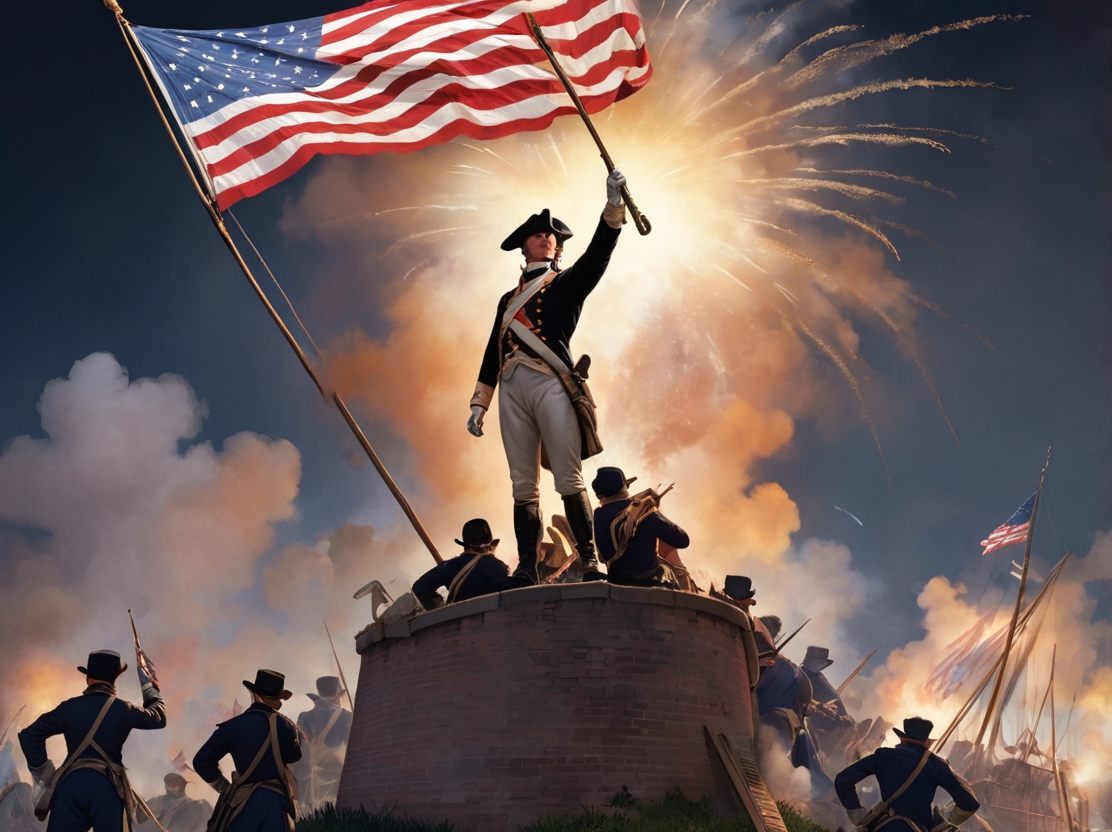
The Battle of New Orleans has permeated popular culture, extending beyond the iconic song to influence various artistic mediums and contribute to the ongoing fascination with this historical event.
a. Beyond the Song: Other Artistic Depictions, Historical Fiction, and Film Portrayals: Beyond Jimmy Driftwood’s song, the Battle of New Orleans has been depicted in numerous other artistic forms. Paintings, historical fiction novels, and even films have attempted to capture the drama and significance of the battle. These depictions often build upon the established narrative, emphasising Andrew Jackson’s heroism and the unlikely victory against the British.
b. How these Depictions Contribute to or Challenge the Established Narrative: These artistic representations often contribute to the romanticised narrative of the battle, reinforcing the image of Jackson as a larger-than-life hero and simplifying the complex historical context. However, some depictions also attempt to challenge the established narrative, exploring the perspectives of different groups involved in the battle, such as the Creoles, free people of colour, and even the British. These more nuanced portrayals offer a more complete understanding of the event and its significance.
c. The Lasting Fascination with the Battle and its Characters: The Battle of New Orleans continues to fascinate the public, fueled by its dramatic narrative, its connection to the War of 1812, and its larger-than-life characters. Andrew Jackson’s rise to prominence through the battle has cemented his place in American history, and the story of Jean Lafitte and his pirates adds a layer of intrigue and romance. The battle’s enduring appeal lies in its combination of historical significance, dramatic action, and compelling personalities.
Conclusion: Separating Fact from Fiction

The Battle of New Orleans, while a significant American victory, has been heavily romanticised and mythologised, particularly through the popular song, obscuring the complex historical context and contributing to a simplified understanding of the War of 1812’s conclusion. While the battle did boost American morale and contribute to a sense of national pride, its military impact was limited, given that the war had already officially ended. While a catchy and entertaining tune, the song “The Battle of New Orleans” has played a significant role in perpetuating these myths, simplifying the narrative and glorifying Andrew Jackson.
The battle’s actual significance lies in its symbolic power. It became a symbol of American resilience and determination, reinforcing the belief in the nation’s ability to defend itself. However, it’s crucial to separate the historical facts from the romanticised version presented in popular culture. The battle’s impact on the treaty negotiations was minimal, and historians have debated its military significance. Understanding the complex historical context, including the diverse forces involved and the war’s broader narrative, is essential for a more accurate understanding of the event.
The power of music and popular culture to shape historical understanding is undeniable. The song “The Battle of New Orleans” demonstrates how a catchy tune and compelling lyrics can transform a historical event into a legendary tale, influencing public perception and contributing to national mythology. While these cultural representations can be entertaining and even inspiring, it’s crucial to examine them and compare them with historical evidence critically. We can only gain a more complete and nuanced understanding of the past and its continuing influence on the present by separating fact from fiction.
FAQs
1. What is the song “The Battle of New Orleans” about?
“The Battle of New Orleans” is a song from 1814. It tells the story of Andrew Jackson and his trip to Louisiana in the United States during the War of 1812.
2. Why is “The Battle of New Orleans” an iconic song?
This song is iconic because it depicts a major historical conflict, becoming part of American folklore.
3. How does food like bacon and beans connect to this military conflict?
In the lyrics, they talk about eating lots of bacon and beans as part of their war life.
4. Is it true that “The Battle Of New Orleans” shares some Louisiana history?
Yes! The Song talks about a real event that took place there called ‘War Of 1812’, hence sharing its past stories.
<p>The post The Battle of New Orleans: An Iconic 1814 Song Depicting the Historical Conflict first appeared on LearningMole.</p>




