Table of Contents
Tie-dye t-shirts capture the essence of personal expression through their vibrant patterns and colours. Each shirt serves as a canvas for individual creativity, showcasing unique designs born from a variety of folding, twisting, and dyeing techniques. The intrinsic charm of tie-dye lies in its unpredictability; no two shirts are ever exactly the same. This craft merges art with fashion, enabling anyone to make a bold, personalised statement.

Delving into the world of tie-dye is an adventure in self-expression. From selecting the right materials to mastering the various techniques, the process is as fulfilling as the final product. As we prepare our dyes and set our stations, the anticipation builds for the reveal of intricate patterns and a burst of colour. Whether it’s the classic spiral or experimental patterns, the tie-dye process is a journey of discovery and creativity.
Michelle Connolly, founder of LearningMole and an educational consultant with 16 years of classroom experience, notes, “Tie-dye is not just an art form; it’s a means of expressing individuality that echoes the diversity of human creativity.”
Key Takeaways
- Tie-dye is an expressive art form that allows for personal creativity through unique designs.
- The process of creating tie-dye involves a range of techniques and materials for bespoke results.
- Each completed tie-dye project is a reflection of individual style and vibrant colours.
The Rich History of Tie-Dye
Before the vivid spirals and bold patterns became synonymous with self-expression, tie-dye had deep roots in history and culture. Let’s explore how this vibrant art form has been a symbol of individualism and a staple in fashion.
Cultural Significance
Tie-dye, with its origins dating back to ancient Asia and Africa, was not just a technique to beautify fabrics; it symbolised social change and became a canvas for protest. During the 1960s, it became intertwined with the counterculture movement, embodying a break away from societal norms. It allowed us to wear our ideologies, quite literally, on our sleeves, championing peace and free spirit.
“Tie-dye was a vibrant thread woven into the fabric of the ’60s, representing a generation’s thirst for change,” says Michelle Connolly, founder and educational consultant with 16 years in the classroom.
Tie-Dye in Fashion
As a fashion trend, tie-dye has ebbed and flowed; it surged in popularity during the psychedelic 60s and had resurgences in subsequent decades. Each wave of popularity tied to tie-dye brought its own flavour, reflecting the spirit of the times – from bold rebellion to an eco-conscious movement. The technique has been embraced by high-fashion designers and street-style aficionados alike, making it a timeless element in wardrobes across the globe.
Selecting the Right Materials
In our quest to create tie-dye T-shirts that truly stand out, the first step is to pick the right materials. This essential foundation ensures that the dye sets well and the final product reflects the vibrant personality of its wearer.
Choosing Fabrics
When selecting fabric for tie-dye, we prioritise natural fibers such as cotton because they absorb dye the best, creating vivid patterns and colours. It’s essential to use a fabric with a high cotton content; ideally, 100% cotton is preferred due to its ability to hold dye effectively.
Dyes and Colour Choices
The choice of dye is critical in the fabric dyeing process. Good quality fabric dyes are the secret to achieving rich and long-lasting colours. For colour selection, we strive for a palette that not only resonates with our creative vision but also offers excellent light and washing fastness to keep the T-shirts looking vibrant over time.
Our approach to tie-dye mirrors the ethos of LearningMole, where Michelle Connolly says, “It’s about bringing creativity and individuality to the forefront of education, just as choosing the right dye can express someone’s individual style.”
Preparing for Your DIY Project
Before embarking on your tie-dye adventure, make sure you have all your supplies ready and understand the safety procedures to create your vibrant designs safely.
Setting Up Your Space
To begin, select a well-ventilated area that’s suitable for messy activities; an outdoor space or a garage would be ideal. Cover your workspace with plastic sheets or newspapers to protect surfaces. Assemble all your tie-dye supplies including dyes, soda ash, and items to dye. Organise your materials within easy reach to streamline your creative process.
- Supplies checklist:
- Dyes
- Soda ash (fixative)
- Squeeze bottles
- Rubber bands
- Plastic bags
- Plastic table cover
Michelle Connolly, founder of LearningMole, emphasises the importance of preparation: “A well-prepared space ensures a smooth and enjoyable crafting experience, where creativity can truly flourish.”
Safety Measures
Safety is paramount. Always wear rubber gloves to protect your hands from dye and chemicals such as soda ash. An apron or old clothes are advisable to shield your garments from potential spills and splatters.
- Safety equipment:
- Rubber gloves
- Apron
- Mask (optional, when handling powdered dye)
We encourage a friendly and safe DIY experience that brings out everyone’s individuality through their unique tie-dye creations.
Tie-Dye Techniques Explained
In this section, we unveil the fascinating world of tie-dye, revealing how simple techniques, applied with a touch of creativity, result in stunning patterns and a brilliant showcase of individual expression.
Basic Patterns
Spiral: This quintessential pattern is achieved by pinching the centre of a shirt and twisting it around until the entire shirt forms a flat spiral shape. Then, use rubber bands to segment the spiral into ‘slices’, much like pizza slices, which then get their own distinct colours.
Crumple: A more free-form approach where the fabric is crumpled into a tight mound, bound by rubber bands randomly placed to create irregular and unique patterns. This technique is perfect for a spontaneous and unpredictable design.
Stripes: Stripes are formed by folding the shirt into accordion-like pleats, then binding it with rubber bands or strings at even or varied intervals, depending on the desired stripe thickness.
Folding: This broad category includes various precise folds that can create geometric shapes or intricate designs, depending on how the fabric is manipulated before dyeing.
Advanced Techniques
Shibori: A Japanese method encompassing several techniques of folding, twisting, and binding, Shibori is a detailed practice where each method results in a distinct pattern. It involves precise and often complex resist methods to control the dyeing process and achieve the desired effect.
Tie-Dye Folding Techniques: Moving beyond simple folds, advanced techniques involve a series of calculated pleats, twists, and turns. The fabric could be folded into triangles, squares or other shapes before being bound and dyed, which requires a higher level of skill and often results in more sophisticated and detailed patterns.
As Michelle Connolly, founder of LearningMole and an educational consultant with a vast experience of 16 years in the classroom, puts it: “Creativity is not just about artefacts and products; it’s about the process. Similar to the careful steps in tie-dyeing, learning should be considered a craft where each step adds depth and value.”
In essence, each tie-dye technique allows us to explore the unlimited potential of fabric as a canvas for self-expression. From the playful spirals to the precise folds of Shibori, the rich tradition of tie-dyeing is a testament to the human desire for creativity and individuality.
The Tie-Dye Process
Creating a tie-dye T-shirt involves a fascinating interplay of folding, binding, and colour application. Let’s discover how these components come together to create unique and vibrant designs.
Binding the Fabric
To start, we choose our fabric and prepare it for dye application. The process begins with folding the fabric into various patterns such as spirals, stripes, or circles. Once folded, we secure the fabric using rubber bands. The placement and tightness of these bands will determine the pattern’s intricacy and the intensity of the dye’s application. Whether we use numerous small rubber bands or fewer, larger ones, each choice affects the final outcome.
Applying the Dye
Next comes the exciting part: applying the dye. We prepare our dye according to the instructions, ensuring vibrant colours and lasting wear. Using squeeze bottles, we carefully apply the dye to specific areas of the bound fabric. We can use one colour for a bold statement or multiple hues for a more dynamic effect. Our control of the dye’s flow is crucial as it influences the design’s sharpness and the transitions between colours. Once the dye is applied, the fabric needs time to absorb the colours fully before we move on to rinsing and setting the design.
In the words of Michelle Connolly, founder of LearningMole and an educational consultant with 16 years of classroom experience, “The beauty of tie-dye is in its unpredictability and the personal touch every creator brings to their work.” As we partake in this creative journey, we’re not just making T-shirts; we’re also crafting a form of wearable art that expresses our individuality.
Designs and Patterns to Try
Exploring the world of tie-dye is an adventure in colour and creativity, allowing us to express our unique personalities. Here are some patterns and designs that can transform basic apparel into a canvas of vibrant expressions.
Classic Spirals
The classic spiral pattern is iconic in the tie-dye universe. To create this dynamic design, we lay our T-shirt flat, pinch the centre or an off-centre point, and twist until the shirt spirals into a flat disc. Secure it with rubber bands, creating wedge-like sections, and then we apply our dyes. While rainbow colours are a popular choice, creating a rainbow spiral, we may also opt for variations like monochromatic shades or a complementary colour scheme for a different twist on this traditional motif.
Unique Creations
For those of us yearning for a fresh take, kaleidoscope and heart patterns offer unique alternatives. The kaleidoscope design can be achieved by folding our shirt into a triangle repeatedly and then applying our dyes in sections, which unfolds into a complex, abstract pattern akin to looking through a kaleidoscope.
In contrast, the heart pattern infuses our garment with a portrayal of love. By folding the fabric in half and drawing half a heart with washable marker, we then pleat along the line and use rubber bands to hold the pleats together. Applying dye strategically around and within the heart area brings this sentimental design to life.
Our tie-dye patterns are more than just an activity; they’re a reflection of our inner self and individuality. They enable us to wear our hearts on our sleeves—sometimes quite literally!
Finishing Touches

Before wearing your tie-dye masterpiece, it’s vital to give it the proper finish. This ensures the longevity of the colours and the uniqueness of your design.
Rinsing and Washing
After the dye has set, rinsing is your first step. It’s best to rinse the shirt under cold running water to remove any excess dye. Handle the fabric gently to avoid muddling your creation. Once the water starts running clear, wash the shirt with mild detergent. Use the gentle cycle on your washing machine, or hand-wash if you prefer.
Drying and Setting the Colour
To dry your shirt safely, you can lay it flat on a drying rack or hang it up to air dry. Avoid direct sunlight which might fade the vibrant design. Some might add a pinch of salt in the final rinse to help set the colour; though opinions vary, it’s worth trying if you wish for extra vibrancy. Michelle Connolly, founder and educational consultant at LearningMole, emphasises, “In crafts as in learning, patience and care in the final stages make all the difference in achieving outstanding results.”
Styling Your Tie-Dye Shirts
Tie-dye shirts are the epitome of self-expression and creativity in the world of fashion. With their bright colours and unique patterns, they offer a playful approach to everyday style that stands out in any crowd.
Fashion Pairings
Pairing a tie-dye shirt with the right items can take your look from casual to chic. For a classic ensemble, try matching a tie-dye shirt with:
- Solid-coloured trousers or jeans, keeping it simple to let the shirt shine
- Layering with a denim jacket or plain blazer for a more trendy touch
- Combining with shorts or a flowing skirt for a relaxed, summery vibe
Accessorising
When it comes to accessorising a tie-dye shirt, less is often more. Focus on:
- Choosing accessories such as a leather belt or a minimalist watch to complement the look
- Wearing simple jewellery like stud earrings or a silver chain necklace
- Opting for a pair of white sneakers or sandals for a casual, effortless finish
Expanding Beyond T-Shirts
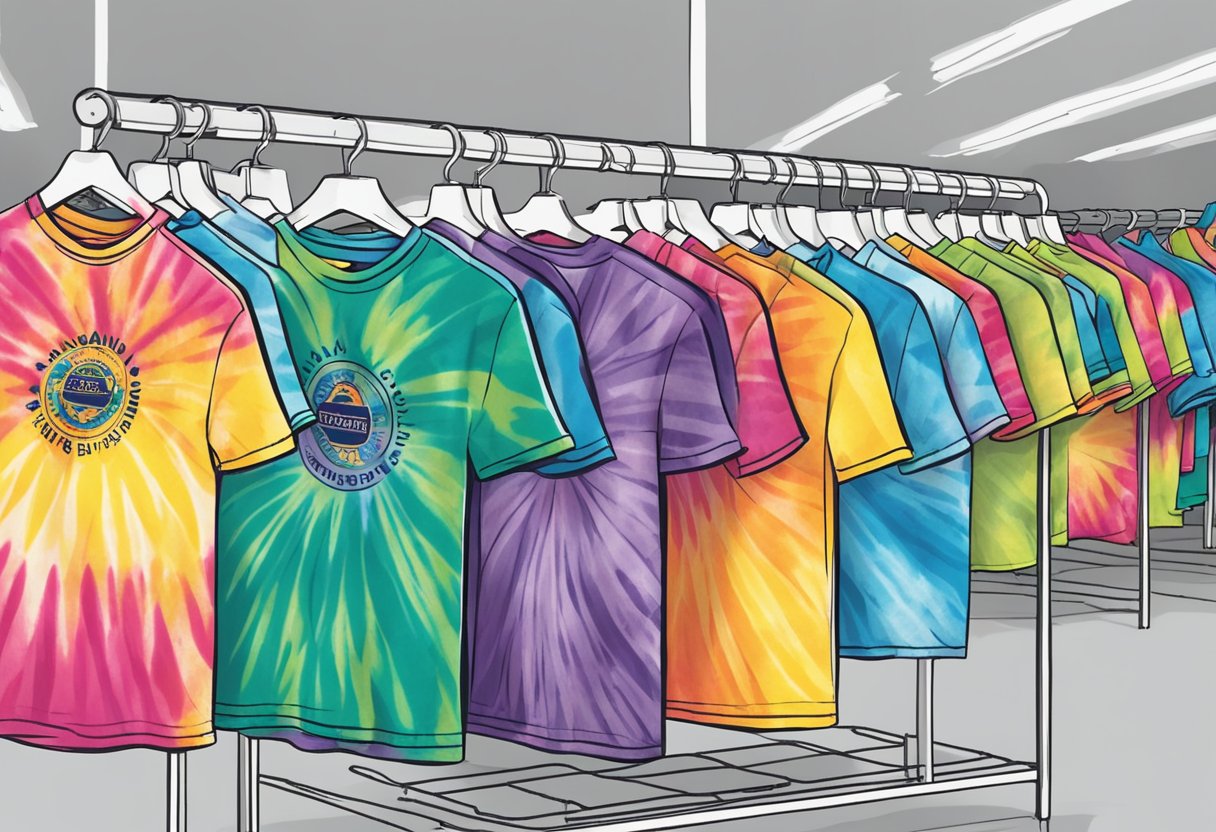
The art of tie-dye is not confined to t-shirts; it extends to a plethora of items such as shoes, bags, socks, and pillowcases, transforming everyday objects into vibrant, personalized statements.
Tie-Dyeing Shoes and Bags
Tie-dyeing shoes elevates regular footwear to artful statements. By carefully applying dye to canvas trainers, you can add splashes of colour, resulting in one-of-a-kind designs that capture individuality. Similarly, bags—from tote bags to backpacks—can be tie-dyed, making every journey a showcase of personal style.
Home Decor Items
Our homes can also reflect our unique aesthetic through tie-dyed home decor. Pillowcases, for example, can inject a burst of colour and pattern into bedroom designs. By applying tie-dye techniques, ordinary linen becomes a canvas for self-expression, perfectly complementing a modern, eclectic interior.
Taking Tie-Dye to the Next Level
Tie-dye has always been a symbol of self-expression and boundary-pushing design. By embracing innovative tie-dye products and business ventures, we can steer this dynamic art form into new, fashion-forward territories.
Innovative Tie-Dye Products
We’re constantly on the lookout for unique designs that stand out as a bold statement. It’s no longer just about T-shirts; the tie-dye hoodie has become a fashion-forward staple for those seeking a combination of comfort and individuality. Here are a few ways we’re taking tie-dye beyond the basics:
- Tie-Dye Footwear: Sneakers and sandals featuring vibrant tie-dye patterns.
- Home Decor: Bedding and curtains that bring a splash of colour to any room.
- Accessories: Scarves, bags, and hats for that extra pop of personality.
By tapping into these products, we open an outlet for tie-dye lovers to express their unique style across different aspects of their lives.
Starting a Tie-Dye Business
If you’re passionate about tie-dye, starting a business can be an exciting journey. Here’s how we can break it down:
- Business Planning: Clearly define your business goals, target market, and how you’ll stand out.
- Design Creation: Develop your signature style that appeals to your target audience.
- Material Sourcing: Find quality materials that will showcase your vibrant designs effectively.
- Marketing and Sales: Build an online presence and use social media to connect with your customers.
Michelle Connolly, the founder of LearningMole and an educational consultant with extensive classroom experience, once said, “In any educational or creative venture, it’s crucial to have a clear vision and a passion for your craft.” This resonates profoundly with us when we talk about transforming a tie-dye hobby into a successful business venture.
Frequently Asked Questions
In this section, we’re exploring some common queries about tie-dye t-shirts to help you express your individuality through vibrant designs and to maintain the brilliance of your creations.
How can I ensure my tie-dye shirt maintains its bright colours after washing?
To keep the colours of your tie-dye shirt vibrant after washing, we recommend washing it in cold water with a mild detergent and separating it from your other laundry. As Michelle Connolly, an authority in educational methods, suggests, “the same care taken during the creative process should be applied to preserve the life of your tie-dye project.”
What are some creative techniques for making my own tie-dye t-shirts at home?
You can explore various folding and tying methods, such as spirals, bullseyes, stripes, or pleats, to add uniqueness to your tie-dye t-shirts. Using different tying objects like marbles and rubber bands can also create interesting patterns. Michelle Connolly, with her sixteen years of classroom expertise, shares that “creative techniques in tie-dye are not just about patterns; they’re about making a statement with colour and design.”
Can tie-dye designs be a form of personal expression?
Absolutely, tie-dye designs can be an expressive form of personal art. Each pattern reflects your individual choices and creativity. “Tie-dye invites you to put a bit of your personality on display,” says educational consultant Michelle Connolly.
What is the history behind the tie-dye fashion trend?
The tie-dye fashion trend has its roots in ancient dyeing techniques from Asia and Africa. It resurfaced as a fashion statement in the 1960s, symbolising freedom and rebellion. Michelle Connolly, a seasoned educator, highlights that “understanding the history of tie-dye can deepen our appreciation for this art form.”
Are there specific styles of tie-dye that are popular among different age groups?
There are indeed specific tie-dye styles that resonate with different age groups. Younger individuals often favour bold and bright patterns, whereas older generations might prefer more subdued, classic styles. Michelle Connolly points out that “regardless of age, there’s a tie-dye style for everyone.”
How do I choose the right fabrics and dyes for creating a tie-dye t-shirt?
For the best results, choose natural fabrics like cotton, which absorb dyes well. Use fibre-reactive dyes for long-lasting colours. Michelle Connolly advises, “Selecting high-quality materials is essential for achieving vivid and enduring tie-dye results.”
<p>The post Tie-Dye T-Shirts: Celebrate Your Uniqueness with Cool Colourful Patterns first appeared on LearningMole.</p>