Table of Contents
In the digital age, early learning is no longer confined to traditional methods; preschools are rapidly integrating digital tools to enhance the educational experience. The careful selection of age-appropriate technology can support the various aspects of a child’s development, from the basics of digital literacy to fostering creativity. As you navigate this new technological landscape in early learning, it’s essential to find the balance between screen use and active, hands-on engagement. With this in mind, digital tools are woven into curriculums to enrich the learning process, rather than to replace the invaluable human interaction and physical play that are vital in early childhood education.

Technology integration in early learning isn’t about simply handing a child a tablet; it’s a thoughtful process involving the design and implementation of educational programs that leverage technology to enhance learning outcomes. Educators, with support for training and professional development, are key to crafting child-centred approaches that utilise technology as a means to engage young learners in innovative experiences.
Moreover, parental involvement is invaluable in extending the learning journey beyond the classroom, and digital platforms can offer a new avenue for communication and collaboration. Michelle Connolly, founder of LearningMole, with her wealth of classroom experience, acknowledges that “Technology in preschools, when used responsibly, has the potential to facilitate unique learning opportunities, as long as it’s used as a tool for engagement and not a substitute for learning.”
Understanding Early Childhood and Technology

In this section, you’ll learn about the significant influence technology has on early childhood education and what constitutes developmentally appropriate practice.
The Role of Technology in Early Childhood
Technology, when integrated thoughtfully, can enrich early learning experiences. In the hands of young children, age-appropriate digital tools can become instruments of creativity and discovery. As Michelle Connolly, founder of LearningMole and educational consultant with extensive classroom experience, states, “Technology, if used correctly, can complement traditional learning methods and enhance the educational journey.”
Developmentally Appropriate Practice
Adopting a developmentally appropriate practice means ensuring that the technology used aligns with the educational needs and developmental stages of young learners. It’s crucial that activities are tailored to meet their individual abilities and help them achieve their fullest potential. Technology in early childhood should support hands-on learning experiences, allowing children to experiment and engage with concepts actively.
Foundations of Digital Literacy in Preschool

In preschool, the bedrock of your child’s journey in the digital world begins with understanding the basics of digital and information literacy. This foundational step sets them on a path of learning, creativity, and innovation.
Building Digital Skills
Digital literacy in early education encompasses the development of digital skills that are age-appropriate and engage young learners. “Children today experience a degree of interconnectedness that necessitates an early introduction to digital skills,” says Michelle Connolly, the founder of LearningMole with extensive experience in the classroom. These skills involve basic interactions with technology such as using a mouse or navigating a touchscreen. Through guided exploration, children learn to utilise digital tools that enhance learning, communication, and problem-solving abilities.
- Key Digital Skills in Preschool:
- Understanding how to operate simple gadgets
- Interacting with educational apps
- Recognising the function of different digital devices
Promoting Information Literacy
The goal of information literacy is to foster an ability in preschoolers to seek out, understand, and use information in meaningful ways. It starts with learning how to interact with digital texts and images in a way that is both safe and beneficial for their development. For example, selecting an educational game or recognising easy-to-understand symbols on a child-friendly website can be the initial steps to building information literacy. It’s about teaching them to make informed choices and use available resources smartly. “Cultivating information literacy is empowering our children to be discerning when faced with the vast digital world,” shares Michelle Connolly.
By taking these early steps in developing digital literacy, you prepare your child for a future where technology is an integral part of learning and everyday life.
Design of Curriculum Integrating Digital Tools
Incorporating digital technologies into early learning curricula should enhance the educational experience for preschoolers, allowing them to interact with content and develop ICT skills in a natural, age-appropriate way.
Interactive Media in Learning Activities
When you integrate interactive media into learning activities, you’re providing children with the opportunity to engage actively with content. Interactive ebooks, apps, and games invite young learners to touch, drag, and interact with digital elements, which can help to cement concepts in literacy and numeracy. For example, an app that teaches counting can allow children to tap and count objects, receiving immediate auditory feedback that reinforces learning.
Michelle Connolly, founder of LearningMole and an expert with 16 years of classroom experience, advocates for the thoughtful inclusion of interactive media: “Digital tools should be used to spark a child’s curiosity and complement hands-on activities that support learning objectives.”
Creating a Technology-Enabled Curriculum
A technology-enabled curriculum is one where digital resources are woven seamlessly into the teaching and learning process. Start by identifying goals within your curriculum that digital technologies can support or enhance. For instance, create a lesson plan that includes a digital storytelling session to improve language and listening skills, or use an online drawing program to complement a unit about shapes and colours in art.
By applying digital resources judiciously and aligning them with the curriculum’s aims, you can create an environment where technology is just another tool encouraging exploration and creativity. It’s essential to ensure that the digital content is age-appropriate and ties back to the learning objectives, keeping the technology as an aid rather than a distraction.
Child-Centred Approaches to Technology

In a world where digital tools are increasingly intertwined with learning, it’s essential to focus on child-centred approaches that harness technology in meaningful ways. This ensures that young children engage with digital media creatively and productively, enhancing their learning through play and igniting their innate creativity.
Learning Through Play
Play is the natural means by which young children explore and make sense of the world. Integrating technology into play is about selecting age-appropriate digital resources that support and enrich this exploratory process. A child-centred approach places the child at the forefront, ensuring that digital play complements rather than replaces traditional play methods. For instance, interactive ebooks or games, designed with input from educational experts like those at LearningMole, enable children to learn at their own pace while also having fun.
Michelle Connolly, the founder of LearningMole, emphasises the importance of a balanced approach: “Technology, when integrated thoughtfully, can add a dynamic layer to the learning process without overshadowing the value of simple, imaginative play.”
Digital Play and Creativity
Creativity flourishes when children are afforded the liberty to explore and experiment. Digital play can offer unique opportunities for creative expression that are not available through other means. With tools that let children create music, draw, or even code in a way that’s geared towards their developmental stage, they can express their creativity in a digital format. These interactive experiences should be carefully curated to inspire and broaden their creative horizons, rather than just entertaining them.
LearningMole recognises that young learners thrive on being creators, not just consumers, of digital content. By fostering a learning environment where children can use digital tools to create their own stories or artwork, we are opening up a world where education is not just about absorbing information, but about nurturing a creative and inquisitive mind.
Assessment of Learning Outcomes with Digital Tools
Advances in technology offer innovative ways to assess learning outcomes in early childhood education. By integrating age-appropriate digital tools, educators can enhance learning experiences and obtain a clearer picture of each child’s progress.
Evaluating Child Progress
Digital portfolios are revolutionising how children’s learning journeys are documented. Easy to update and share with parents, these portfolios enable educators to monitor growth over time and adjust teaching methods accordingly. Interactive software can track children’s responses, allowing for real-time assessments that provide immediate feedback to both teacher and learner.
“Assessing young learners requires a balance between observational strategies and technology-driven solutions,” says Michelle Connolly, an education consultant with extensive classroom experience. Michelle underscores the importance of assessments that adapt to the individual needs of each child.
Technology in Practical Assessments
In practical assessments, technology enables educators to analyse learning outcomes in ways that paper-based tests cannot. For instance, using a tablet, a child can complete a task that assesses not only knowledge, but also fine motor skills and decision-making abilities. Software platforms can provide teachers with detailed reports that break down each aspect of the assessment, highlighting strengths and areas for improvement.
Digital tools can also enhance learning by turning assessments into interactive activities that engage children and reduce the stress associated with testing. With applications that incorporate elements of play, assessments become an integral part of the learning experience rather than a separate, daunting event.
The Impact of Screen Use in Early Years
Navigating the world of screen time for preschoolers can be tricky; finding a balance is key. It’s about setting healthy limits and using tech as a tool for learning and growth.
Setting Appropriate Screen Time
Screens have become a ubiquitous part of modern childhood education, but establishing boundaries is crucial. According to Michelle Connolly, founder and educational consultant at LearningMole, “Each child is unique; setting screen time should reflect their individual needs and daily routine.” For preschoolers, experts often recommend no more than an hour of high-quality screen time per day. This guideline can ensure that digital devices supplement, rather than replace, vital real-world experiences and interactions.
Using Tablets and Digital Devices Responsibly
Tablets and other digital devices can be fantastic learning tools if used thoughtfully. Introduce your child to age-appropriate apps that encourage creative play and problem-solving. The key is to use these tools alongside traditional early childhood practices, ensuring that tablet time is interactive and educationally valuable. Remember, passive screen use can never substitute the active engagement a child needs for development, so active participation from an adult is often necessary to maximise the benefits of digital devices.
Training and Professional Development for Educators

Educators stepping into the world of early learning technology need robust training and professional development to guide young learners effectively.
Skills for Pre-Service Teachers
As you embark on your journey to become a pre-service teacher, acquiring specific skills in educational technology is crucial.
- Technical Proficiency: You should be adept at navigating age-appropriate digital tools and platforms.
- Pedagogical Knowledge: Understanding of how technology integrates with established teaching practices is essential.
Training programmes often account for these needs. For example, Michelle Connolly, an educational consultant, stresses that “Pre-service teachers must be agile learners, ready to blend traditional pedagogy with digital advancements.”
Ongoing Development in Educational Technology
Once in the profession, your ongoing professional development should focus on:
- Keeping Up-to-Date: Stay abreast with the latest digital resources, such as the ones provided by LearningMole, offering insights into innovative teaching methodologies.
- Collaborative Learning: Engage in communities of practice to share strategies and resources.
Regular workshops and webinars can greatly benefit your continuous professional growth in adapting to new technologies. Michelle Connolly remarks, “Continuous professional development is not an option but a necessity in the ever-evolving landscape of educational technology.”
Parental Involvement and Communication
Strong parent-teacher communication and guiding parents on age-appropriate technology use are pivotal in ensuring that digital tools are effectively integrated into preschool education.
Tools for Enhancing Parent-Teacher Communication
Effective communication between parents and teachers is essential for integrating technology in early learning environments. LearningMole offers various resources to foster this collaboration. They advocate for the use of dedicated communication platforms where parents can receive regular updates on their child’s progress and classroom activities. This can include digital portfolio apps or regular newsletters that showcase children’s learning experiences with technology.
Michelle Connolly, founder of LearningMole, emphasises, “The goal is to create a transparent and continuous dialogue so that technology becomes a bridge rather than a barrier in a child’s education.”
Guiding Parents on Age-Appropriate Tech Use
When it comes to introducing children to technology, parents can often feel out of their depth. LearningMole steps in to educate parents on the importance of age-appropriate technology use. It’s not just about limiting screen time but also about choosing educational apps that align with the child’s developmental stage. Resources on LearningMole help parents make informed decisions about the digital tools their children are using.
“Parents are the first educators, and empowering them with knowledge about age-appropriate technology can significantly impact a child’s learning journey,” says Connolly, who has 16 years of classroom experience and deeply understands the impact of technology on early education.
Innovative Learning Experiences
The integration of digital tools in early learning brings forth new and engaging ways for children to absorb information. These tools can harness the power of storytelling and develop foundational skills in coding and computational thinking, essential in this digital age.
Storytelling through Digital Media
Storytelling has always been at the heart of children’s learning. Through digital media, the ancient art of telling tales is transformed. Interactive eBooks and apps like those found on LearningMole offer vibrant illustrations and animations that enchant young readers, making the characters and settings leap off the page. “In today’s digital age, it’s about bringing stories to life in a way that captivates and educates our children,” says Michelle Connolly, a passionate advocate for incorporating technology in education.
Encouraging Coding and Computational Thinking
Introducing coding to preschoolers might seem ambitious, but with age-appropriate tools, it becomes an exciting exploration of logic. LearningMole provides interactive and playful experiences that introduce the concepts of computational thinking. Engaging in puzzles and games lays the groundwork for coding skills, giving young minds a head start. “Coding isn’t just for future computer scientists; it teaches problem-solving and creativity, core skills for any path children might choose,” explains Michelle Connolly. With the right approach, every child can take their first steps in computational thinking and be well-prepared for their digital future.
Promoting Expressive Arts with Digital Tools
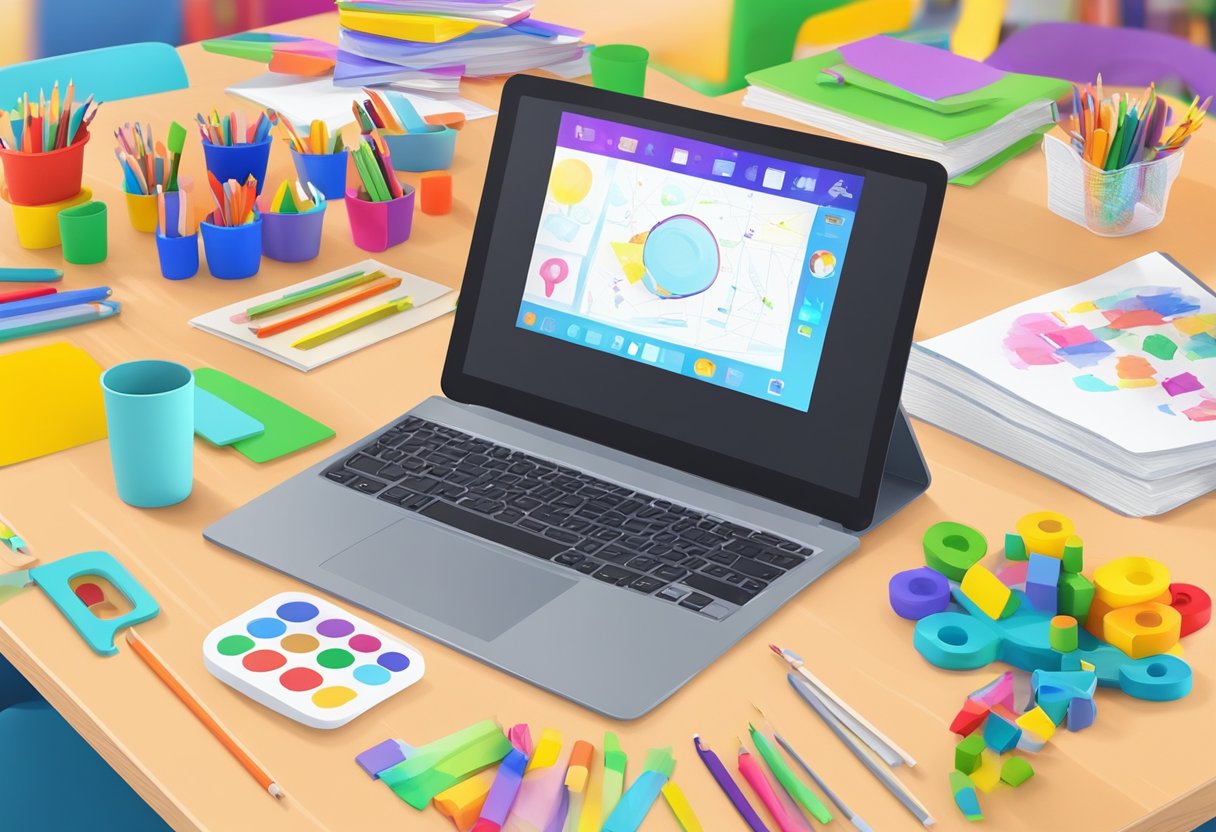
Digital tools offer innovative avenues for enhancing creativity in expressive arts within a preschool setting. These tools not only facilitate artistic expression but also engage children in a multimodal learning experience.
Digital Tools in Singing and Dancing
Singing and dancing are quintessential parts of early childhood education that contribute to a child’s creative and physical development. With the right digital resources, you can introduce children to a world of rhythmic patterns and melodies.
- Interactive singing apps: Apps that offer a repertoire of children’s songs with animated characters and subtitles can significantly enhance children’s learning experience by making it possible for them to sing along and learn the lyrics more effectively.
- Dance and movement games: Technology such as motion-sensitive gaming platforms can capture children’s movements, allowing them to interact with graphics on screen and thus encouraging them to dance with more coordination and rhythm.
Michelle Connolly, who has championed educational innovation for over 16 years, remarks, “Technologies like these are not just tools; they’re gateways that encourage children to explore their own voices and bodies in relation to music and dance.”
Exploring Keyboard and Digital Music
The keyboard can be a fantastic digital tool to spur creativity in music for young learners. Accessible keyboard apps and software enable children to experiment with different sounds and rhythms, fostering an understanding of music composition.
Virtual keyboards: These allow for the exploration of various musical sounds and aid in learning basic melodies. Children can experiment with different instrument sounds, encouraging a diverse musical experience.
Music creation apps: Apps designed for children to create their own compositions reinforce creativity and provide insight into the structure of music. They combine educational value with an enjoyable, hands-on approach to music learning.
“With the right digital tools, even preschoolers can compose music that reflects their own imagination,” says Michelle Connolly, reflecting on the potential for digital instruments to unlock new dimensions of artistic expression in young children.
By integrating these digital tools into the expressive arts, you are not only enriching children’s artistic abilities but also enhancing their overall learning journey through technology.
Frequently Asked Questions

In this section, you will find targeted insights into integrating digital tools in preschool settings, addressing common queries with practical advice.
What are the best strategies for integrating digital tools in a preschool classroom?
It’s essential to choose digital tools that complement your teaching objectives and to carefully plan how they fit into your curriculum. Michelle Connolly suggests starting small, with one or two tools, and gradually expanding as you and the children grow more comfortable.
How can technology be used to enhance developmental learning in early childhood?
Technology, when used judiciously, can boost engagement and support various developmental areas such as language, cognitive skills, and social interaction. “Using interactive apps that encourage problem-solving and creative thinking can be incredibly beneficial,” says Michelle Connolly.
What are the potential drawbacks of utilising technology in early childhood settings?
Overreliance on technology can lead to reduced physical activity and less face-to-face interaction. It’s important to balance tech use with other types of learning experiences and to be mindful of screen time recommendations for young children.
Can you provide some examples of age-appropriate digital activities for young children?
Simple, interactive games that reinforce learning concepts like colours, shapes, and numbers are suitable. Also, apps that involve drawing or making music can support fine motor skills development and creativity.
In what ways does assistive technology support preschool children with additional needs?
Assistive technology offers specially designed tools to cater to children with diverse learning needs, from communication devices for children with speech difficulties to touch screens for those with fine motor challenges. Michelle Connolly points out, “These tools can be life-changing in giving every child a voice and a way to participate.”
How do educators measure the impact of technology on early learning outcomes?
Educators assess the impact by observing children’s engagement levels and progress in specific learning areas and by collecting feedback from both children and parents on the technology’s effectiveness. This feedback is crucial in shaping a technology-integrated curriculum that truly supports learning.
<p>The post Preschool Tech: How to Weave Digital Tools into Early Childhood Education first appeared on LearningMole.</p>





