Table of Contents
Engaging students in the learning process is a fundamental challenge in education. In a world where technology has become pervasive, multimedia tools offer an innovative pathway to capture the interests of learners. Integrating videos, animations, and interactive content into the classroom provides students with diverse and stimulating ways to absorb information. The role of multimedia in enhancing student engagement is increasingly recognised, transforming the traditional learning environment into a dynamic and interactive space that caters to various learning styles.

The use of multimedia is not simply about adding novelty to lessons; it’s about enriching the educational experience to foster deeper understanding. Educational consultant Michelle Connolly comments, “The effective use of multimedia in education requires a blend of technology and pedagogy that resonates with students on a personal level.”
The application of multimedia tools in education is multifaceted. From online platforms that facilitate immersive learning experiences to interactive video content that maintains student focus, these resources can promote better engagement by making learning more relevant, accessible, and enjoyable.
The Role of Multimedia in Student Engagement
Multimedia tools have revolutionised the way students engage with material. Through dynamic and interactive content, learners are not just passive recipients but active participants in their education.
Video as a Learning Tool
Incorporating video into education transforms the learning experience. It allows you to see complex concepts in action, bridging the gap between theoretical knowledge and practical understanding. “Video resources have changed the teaching landscape,” says Michelle Connolly, founder and educational consultant, “drawing in learners with a mix of visuals, audio and storytelling to cement understanding.”
Podcasts and Audio Recordings
Podcasts and audio recordings offer a unique form of engagement—learning through listening. This auditory approach provides a flexible learning experience, allowing you to absorb information without being tied to a screen or a book.
Interactive Visual Aids
Interactive visual aids enrich learning by enabling direct interaction with the material. Whether through touch-screen technology or drag-and-drop elements in online resources, the kinesthetic aspect reinforces engagement and helps cement understanding.
Through multimedia tools like videos, podcasts, and interactive visual aids, your learning experiences become more engaging and effective. Use these tools to enhance your understanding and make the most of your educational journey.
Pedagogical Approaches to Multimedia Use
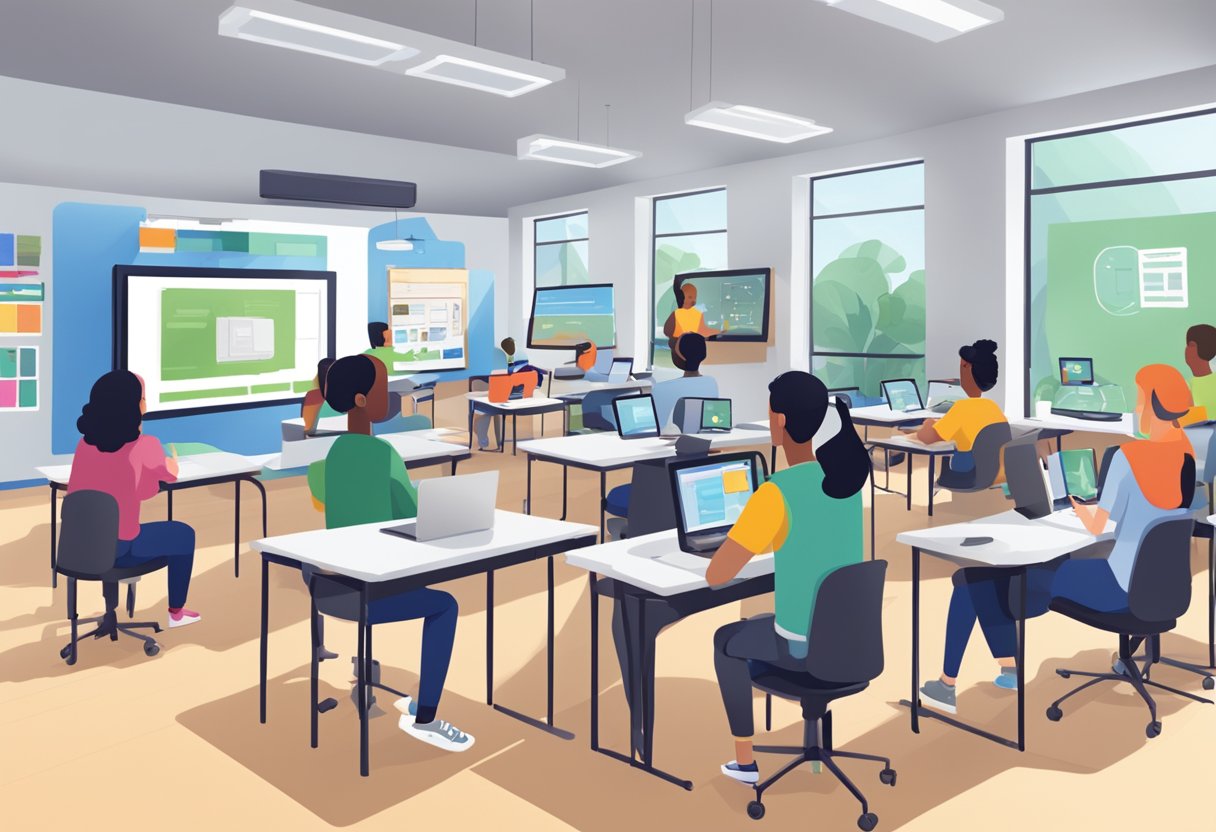
As you delve into the realm of education, it’s crucial to understand how multimedia tools can revolutionise teaching and learning. These tools support varied pedagogical strategies and engage students in innovative ways.
Collaborative Learning Environments
Multimedia facilitates collaborative learning environments where you and your peers can interact and learn from one another. Tools such as shared documents, videos, and interactive whiteboards allow for real-time collaboration and exchange of ideas. Michelle Connolly, an educational consultant with 16 years in the classroom, remarks, “Technology has transformed the traditional classroom into a hub of shared knowledge creation.”
Augmented Reality in Education
Utilising augmented reality (AR) in education brings an immersive layer to your learning experience. You can visualise complex structures, historical events, and scientific phenomena right before your eyes. For instance, an AR app that animates the human body’s systems can provide a tangible understanding of anatomy and physiology.
Gamification of Learning Content
Gamification of learning content incorporates game design elements in educational settings, creating a more engaging and motivating experience. Whether it’s earning points for completing challenges or progressing through levels as you master new topics, gaming elements can make learning more compelling and fun.
With these pedagogical approaches, multimedia tools can significantly enhance your interaction with course material, fostering a deeper and more engaging learning experience.
Technological Advancements and Student Interaction
As technology evolves, the way you interact with educational content revolutionises. Here’s how adaptive learning systems, virtual reality, and social media are playing pivotal roles in enhancing student interaction.
Adaptive Learning Systems
Adaptive learning systems utilise sophisticated algorithms to create a personalised learning experience tailored to your individual needs. This technology continuously analyses your performance and customises the content to challenge you at just the right level. Michelle Connolly, an expert with over 16 years in the classroom, mentions, “Adaptive learning technology allows each student to work at their pace, with tasks that are directly aligned to their learning needs.”
Virtual Reality and Immersion
Virtual reality (VR) offers immersive learning experiences that can transport you to different environments for hands-on interaction – from dissecting virtual frogs to exploring historical sites. This technology aids in enhancing your engagement and retention by bringing subjects to life. “Virtual reality bridges the gap between theoretical knowledge and practical application,” Michelle Connolly notes, emphasising the value of technology in education.
Social Media as an Educational Tool
Social media has transformed into a dynamic educational tool by facilitating collaboration and communication. Platforms like LearningMole leverage social media’s interactivity to encourage dialogue and shared learning experiences. Through these platforms, you can connect with peers and educators, sharing insights and resources. Michelle Connolly points out, “Social media when used effectively in education, can empower students to build their learning networks.”
Online Learning Platforms and Engagement
Engagement is critical for the success of online education. Multimedia tools in online learning platforms can significantly enhance student participation and help them maintain their focus.
Learning Management Systems Usage
Learning Management Systems (LMS) such as Moodle provide a centralised hub for students and teachers. You will find an array of features like course content uploading, assignment submission, and grading within these systems. They are designed to streamline the educational process and foster engagement by keeping resources and communications in one accessible location.
Webinar Tools for Virtual Classrooms
Webinar tools such as Zoom allow real-time virtual classrooms to become a reality. With functionalities like screen sharing, breakout rooms, and interactive polls, these tools make online classes more dynamic. Zoom has become synonymous with virtual learning, facilitating live interactions that mimic the in-person experience, which is essential for maintaining student engagement.
Utilising Social Networking for Learning
Social networking can transform the educational experience, making it more collaborative and interactive. Platforms like Google Classroom integrate with other Google services to enhance communication and facilitate project-based learning. Platforms enable you to share resources, engage in discussions, and submit assignments in a more informal, engaging environment.
“Through LearningMole, we’ve witnessed firsthand the incredible impact that integrated social networking can have on student engagement,” says Michelle Connolly, LearningMole’s founder and educational consultant. Her 16 years of classroom experience reinforce the importance of these platforms in modern education.
COVID-19 Pandemic: Challenges and Opportunities
The COVID-19 pandemic has brought both challenges to the education system and opportunities to embrace technological advancements. As you explore this section, you’ll understand how the pandemic disrupted traditional learning and teaching methods, compelling a shift towards digital tools for educational continuity.
Impact on Learning and Teaching
The onset of the COVID-19 pandemic starkly interrupted the conventional classroom setting, instigating a swift and sometimes chaotic transition to online education. Educators and learners across the globe faced the daunting task of converting to distance learning methods, often without prior experience or training.
Table 1: Education Disruption Due to Pandemic
| Aspect | Challenge | Opportunity |
|---|---|---|
| Accessibility | Students and teachers struggled with digital access | Push for improved infrastructure and resource allocation |
| Engagement | Reduced face-to-face interaction affected motivation | Adoption of interactive multimedia tools to engage students |
| Instruction | Traditional lesson plans were not feasible | Innovation in pedagogy that leverages digital content |
Yet, this shift also uncovered an unforeseen potential within the educational landscape. Digital tools played a pivotal role, with platforms and resources designed to mimic and enhance the classroom experience.
“During this period, we witnessed an incredible surge in teachers adopting digital platforms; it was both challenging and inspiring,” says Michelle Connolly, an educational expert with 16 years in the classroom.
Adoption of Digital Tools for Continuity
The necessity for educational continuity drove a surge in the use of digital tools. Cloud-based technologies, learning management systems, and multimedia resources like those offered by LearningMole became lifelines for schools, teachers, and students adapting to new learning environments.
- Digital Tools Quick Facts:
- Improved reach, allowing education to continue in remote locations.
- Increased flexibility in learning pace and style, catering to individual needs.
- Fostered innovation in education technology, creating new teaching methodologies.
As the pandemic reshaped the education system, it also emphasised the importance of equipping both educators and students with the necessary digital skills. The tools initially deployed for crisis management may pave the way for a more resilient and inclusive long-term education framework.
Michelle Connolly highlights, “Adopting digital tools isn’t just a temporary fix; it’s an investment in a more dynamic and accessible future for education.”
Multimodal Learning Experiences
Multimodal learning experiences harness a variety of sensory inputs to enhance student engagement and deepen comprehension. From videos to interactive simulations, these resources knit together visuals, text, sound, and interactivity for an enriching educational journey.
Engaging Through Multimodal Resources
Multimodal resources offer a dynamic way to present information that caters to different learning preferences. Visual learners can benefit from diagrams and infographics, while auditory learners may prefer podcasts or lectures. On the other hand, Kinesthetic learners could engage more with interactive activities that allow them to manipulate objects or conduct experiments.
“Integrating multimodal resources is essential as it touches upon various sensory inputs, making learning more appealing and effective,” says Michelle Connolly, founder at LearningMole.com, highlighting the importance of diverse learning tools.
Incorporating these resources can transform traditional lessons into interactive experiences. For instance, an online platform that combines text, video, and interactive quizzes can make a history lesson come alive by allowing students to immerse themselves in a simulated archaeological dig.
- Videos: Break complex topics into digestible chunks.
- Interactive simulations: Enable hands-on learning without the physical constraints.
- Audio recordings: Offer flexibility to learn on-the-go.
- E-books: Provide an in-depth look with the convenience of search and annotation functions.
Leveraging Multimodal Feedback for Improvement
Feedback is a crucial construct in the learning process, and multimodal tools can offer it in various forms. Immediate automated responses from educational software help students understand their mistakes in real-time. Meanwhile, video feedback allows educators to convey nuances that text alone might miss.
Michelle Connolly, with her 16 years in the classroom, stresses, “Feedback through multimodal tools not only informs learners of their progress but also engages them in a reflective learning process.”
- Instant quizzes: Offer quick checks for understanding with automated feedback.
- Video responses: This can provide a more personal touch and clarification.
- Peer feedback platforms: Facilitate a collaborative environment where students can learn from one another.
The goal of leveraging feedback is to help students construct knowledge actively and to encourage a cycle of continuous improvement. When feedback is diverse and multi-channeled, it allows a deeper engagement with the subject matter, prompting students to reflect more critically on their work.
Institutional Strategies and Student Success
Achieving student success in higher education hinges on implementing effective institutional strategies. Key to this advancement is the integration of multimedia tools within curricula that not only bolster student learning but also pave the way for academic achievement.
Incorporating Multimedia Tools in the Curriculum
Institutions have recognised the value of multimedia tools in enriching the educational experience. By weaving educational technology into curricula, they provide a dynamic and interactive platform that caters to various learning styles. Michelle Connolly, founder of LearningMole and an educational consultant, states, “The strategic inclusion of multimedia resources in lesson planning can transform a static classroom into a vibrant learning environment, effectively bridging the gap between theoretical knowledge and practical application.”
As an educator, you can harness a range of multimedia such as videos, interactive simulations, and podcasts to stimulate student interest and enhance understanding. These tools not only make lessons more engaging but also support complex concept mastery through varied forms of representation.
Boosting Academic Achievement through Tech
Institutions in higher education are leveraging technology to drive student achievement. It’s established that engaging with educational content through technology not only bolsters their technical skills but can also improve their academic outcomes.
Interactive whiteboards, online discussion forums, and virtual labs are examples of technology utilised to enhance academia. With these tools, students are likely to find the learning process more engaging, which can translate to greater mastery of the subject and improved performance assessments.
Remember, when incorporating these tools, it’s essential to ensure they are accessible and contribute effectively to your institution’s learning objectives. As Michelle Connolly articulates, “True educational innovation emerges when technological advancements are aligned with pedagogic goals, ensuring that every student reaps the full benefits of digital learning advancements.”
Evaluating Student Participation and Performance

When you’re looking at enhancing learning, it’s important to consider how you’re evaluating student participation and performance. These two components can give insight into the effectiveness of multimedia tools in education.
Monitoring Attendance and Involvement
Monitoring attendance and student involvement is key to understanding multimedia’s impact in the classroom. You can track attendance digitally to see how frequently students engage with online resources. But involvement goes beyond just being present; it’s about active participation. Use interactive platforms to see real-time stats on who contributes to discussions, completes tasks, and access materials.
Assessing Academic Performance
Academic performance is often the most telling indicator of engagement. Through systematic literature reviews, you can identify assessment strategies that correlate with high levels of academic success. Tests, quizzes, and assignments delivered through multimedia tools provide ample data. This not only allows you to adjust content to fit your students’ needs better but also gives students immediate feedback to help them improve.
Remember, multimedia tools in education are there to aid your students’ learning journey. Your role in evaluating their participation and performance is crucial to make sure everyone gets the most out of these technologies. Michelle Connolly, founder of LearningMole with 16 years of classroom experience, states, “Regular evaluation ensures that education is a two-way street, where we can fine-tune our approaches according to the needs of our students.”
Research and Insights into Multimedia Engagement
When considering the use of multimedia tools in education, it’s essential to look at the studies and systematic reviews that highlight how these resources can enhance student engagement.
Analysing Educational Research Methodologies
Educational research provides insights into the effectiveness of multimedia in the classroom by utilising a variety of methodologies. Scopus often serves as a database for researchers to find peer-reviewed articles that utilise both qualitative and quantitative methods to assess student engagement.
The quantitative approach, for example, might involve analysing test scores to determine if multimedia tools have a positive impact on learning outcomes. In contrast, qualitative research methodologies could include case studies or interviews with students and educators to gather in-depth perspectives on the use of multimedia tools in education.
Web of Science is another comprehensive database that indexes a significant amount of research articles, where methodology sections are scrutinised to ensure the validity and reliability of the research.
Synthesis of Systematic Reviews on Engagement
A systematic review is a method used to collect and critically analyse multiple research studies. When it comes to the use of multimedia in enhancing student engagement, systematic reviews aim to synthesise various studies to draw conclusions about the general effectiveness of these technologies. They look at different factors, such as the type of multimedia tool used—videos, podcasts, interactive applications—and the context in which they’re used. The synthesis part of these reviews involves comparing results across studies to understand better the conditions under which multimedia tools are most effective.
“It’s not just about flashy visuals or the latest tech,” notes Michelle Connolly, an expert in educational technology with over 16 years of classroom experience. “Engagement comes from how these tools are integrated into the learning experience to make it meaningful.”
To truly harness the potential of multimedia in the classroom, your approach must be informed by the insights gleaned from these careful analyses. Making evidence-based decisions can lead to more effective teaching strategies and, ultimately, raise the level of student engagement.
Frequently Asked Questions
Multimedia tools have transformed the educational landscape, offering dynamic and interactive ways to engage students. These applications have been shown to enhance learning, participation, and overall academic performance. They create an environment where education is informative and exciting and interactive.
How might technological tools be adapted to promote more active student participation?
Technological tools can be adapted for classroom use to create interactive learning experiences. For example, teachers might incorporate polling software to prompt live feedback during lessons, which encourages every student to contribute their thoughts. “Technology should be seen as an aid to engage all students in a way that traditional methods might not be able to,” suggests Michelle Connolly, a pioneer in education technology.
In what ways can the application of technology foster greater student engagement and academic performance?
The application of technology in education can offer students a personalised learning journey. Tools such as adaptive learning software adjust to the individual’s pace and understanding, thereby enhancing engagement and performance. Michelle Connolly, with her extensive experience, notes, “Adaptive technology means lessons are more relevant to each student, which often results in improved academic outcomes.”
How can multimedia be utilised to augment student learning experiences?
Multimedia can augment student learning by incorporating visual aids, audio clips, and interactive modules that cater to various learning styles. Interactive whiteboards and educational videos can turn abstract concepts into tangible understanding. “Multimedia not only diversifies teaching but also deepens learning,” says Michelle Connolly, highlighting its impact on education.
What role do digital educational tools play in heightening students’ engagement and active involvement?
Digital educational tools play a crucial role in creating a learning environment that is responsive and collaborative. Tools such as discussion forums and group projects facilitated by technology can foster a sense of community and active involvement among students. Michelle Connolly confirms, “When students collaborate online, it can enhance their engagement and build essential digital communication skills.”
What are the proven benefits of employing multimedia learning tools for student education?
Multimedia learning tools have proven benefits, such as improving memory retention and motivation. The use of educational animations, simulations, and games makes learning more stimulating and enjoyable, leading to better retention of information. “Multimedia tools have the potential to transform rote learning into an exciting discovery process,” states Connolly.
How does the integration of technology into teaching methods influence student interest and interaction in the learning process?
Integrating technology into teaching has a positive influence on student interest and interaction. It facilitates a more exploratory approach to learning where students are encouraged to conduct research, access online resources, and participate in virtual field trips. “Technology integration is pivotal for developing critical thinking and research skills in an engaging way,” remarks Michelle Connolly.
<p>The post Enhancing Student Engagement Through Multimedia Tools: Strategies for Interactive Learning first appeared on LearningMole.</p>





