Table of Contents
The influence of technology on education is an ever-evolving story of student attention potential and challenge. In classrooms around the world, digital tools have revolutionised the way you learn, offering unprecedented access to information and resources. The integration of technology in education impacts not just the way you access information but also how you engage with content and develop critical learning skills. The purposeful inclusion of technology in education has the potential to enhance learning and build important 21st-century skills.

As technology permeates every aspect of the educational landscape, it brings with it both opportunities and obstacles. While it enables personalised learning environments and supports diverse educational needs, including students with special educational needs (SEN), it also imposes demands on your attention span and poses challenges for maintaining engagement. Education technology (EdTech) holds promise for nurturing collaborative learning and boosting academic performance, yet the effectiveness of technological integration is contingent upon finding the right balance and appropriate methodologies.
Michelle Connolly, founder of LearningMole and an educational consultant with extensive classroom experience, emphasises, “Technology, when used creatively and effectively, can support students in achieving remarkable learning outcomes.” Remember that technology is a tool, and its impact on education hinges on how you—the educators and learners—employ it.
The Role of Digital Technology in Education
Digital technology in education goes beyond mere gadgets; it transforms how you learn, engage, and interact with educational content.
Innovations and Trends
The evolution of digital technologies has been particularly transformative in the education sector. Augmented reality (AR) allows for immersive learning experiences, enabling you to explore the human body or historical sites without leaving the classroom. Artificial intelligence (AI) has introduced personalised learning, with AI tools adjusting to your pace and learning style. Notably, gamification techniques have turned learning into an engaging activity, improving your motivation and participation.
Example: “Augmented reality in education has changed the way children view the world, offering them a window into a new dimension of learning,” says Michelle Connolly, Founder of LearningMole and an expert in educational technology with over 16 years of classroom experience.
Teaching Methods Enhanced by Technology
Educational technology integrates seamlessly into teaching methods. Teachers can now use interactive digital whiteboards to enhance lessons, facilitating dynamic discussions and collaborative learning. Gamification elements such as points and leaderboards in educational software have been proven to increase engagement. AI tools provide instant feedback in science and mathematics, helping you correct mistakes and understand complex problems better.
Efficacy: According to LearningMole, combining traditional teaching with today’s technology leads to a more enriched learning journey that taps into your natural curiosity and desire to learn.
Enhancing Student Engagement and Attention
The introduction of technology in classrooms has opened up new avenues for addressing the dwindling attention spans and enhancing student engagement. This section breaks down the challenges and shares techniques for maximising focus.
Attention-Span Challenges
You might have noticed that students struggle to maintain their focus over extended periods. This is linked to the multifaceted digital world they grow up in, which often leads to a decreased attention span. Researchers, such as those highlighting the impact of AR-based educational resources, have brought to light that the constant stream of stimuli presents significant attention-span challenges in educational settings.
Techniques for Maximising Focus
To combat these challenges, educators are turning to techniques that make learning more interactive. By incorporating gamification in the curriculum, teachers can harness the motivational power of games to improve learning outcomes. According to educational consultant Michelle Connolly, with over 16 years of classroom experience, “Gamification elevates the learning experience, making content stick through active engagement and positive reinforcement.”
Moreover, the use of virtual-reality tools can transform the conventional learning experience into an immersive one, which is shown to increase student attention greatly. This approach holds students’ interest and makes abstract concepts tangible. For instance, virtual reality can visually take students through historical events or biological processes, sustaining their attention through captivating experiences.
Integrating interactive learning strategies is essential to encouraging consistent student engagement. Simple methods such as interactive polls or question-and-answer sessions can significantly boost participation and attention in the classroom.
By considering these methods and embracing innovative tools, educators can tailor their teaching strategies to meet the needs of their students better, ensuring higher levels of focus and engagement during lessons.
Effective Teaching with Technological Integration
Integrating technology into teaching practices is reshaping how lessons are planned and student learning assessed. It harnesses a range of resources and innovative tools to create interactive and personalised learning experiences.
Lesson Planning and Technology
When you integrate technology into your lesson planning, it opens up a diverse range of resources that can enhance the learning experience. From interactive whiteboards to educational software, technology facilitates varied instructional methods. For example, AI literacy tools can analyse student performance data to suggest customised learning activities and materials that address individual needs.
Use of educational platforms:
- Enhanced engagement with multimedia resources such as videos and interactive simulations
- Access to a broader range of information through digital research tools and online databases
Michelle Connolly, founder of LearningMole, underscores the importance of technology in lesson planning: “With tech resources, you can bring a new dimension to your teaching strategies and cater to different learning styles.”
Assessment and Grading Innovations
Technology also revolutionises assessment and grading, providing you with automated tools that save time and offer detailed insights into student performance. Grading software can quickly score assessments, while online quizzes provide immediate feedback to students.
Benefits of technology in assessment and grading:
- Quick feedback to students through automatic grading systems
- Data-driven insights that help track progress and identify areas for improvement
Michelle Connolly states, “Innovative grading technology not only streamlines the assessment process but also allows for a more nuanced understanding of each student’s learning journey.”
As you shift towards a technologically integrated classroom, continue exploring ways to use technology-enhanced resources in lesson planning and grading. This will not only make your teaching more effective but also prepare students for the technological landscape they will face in the future.
Impact on Learning Skills Development
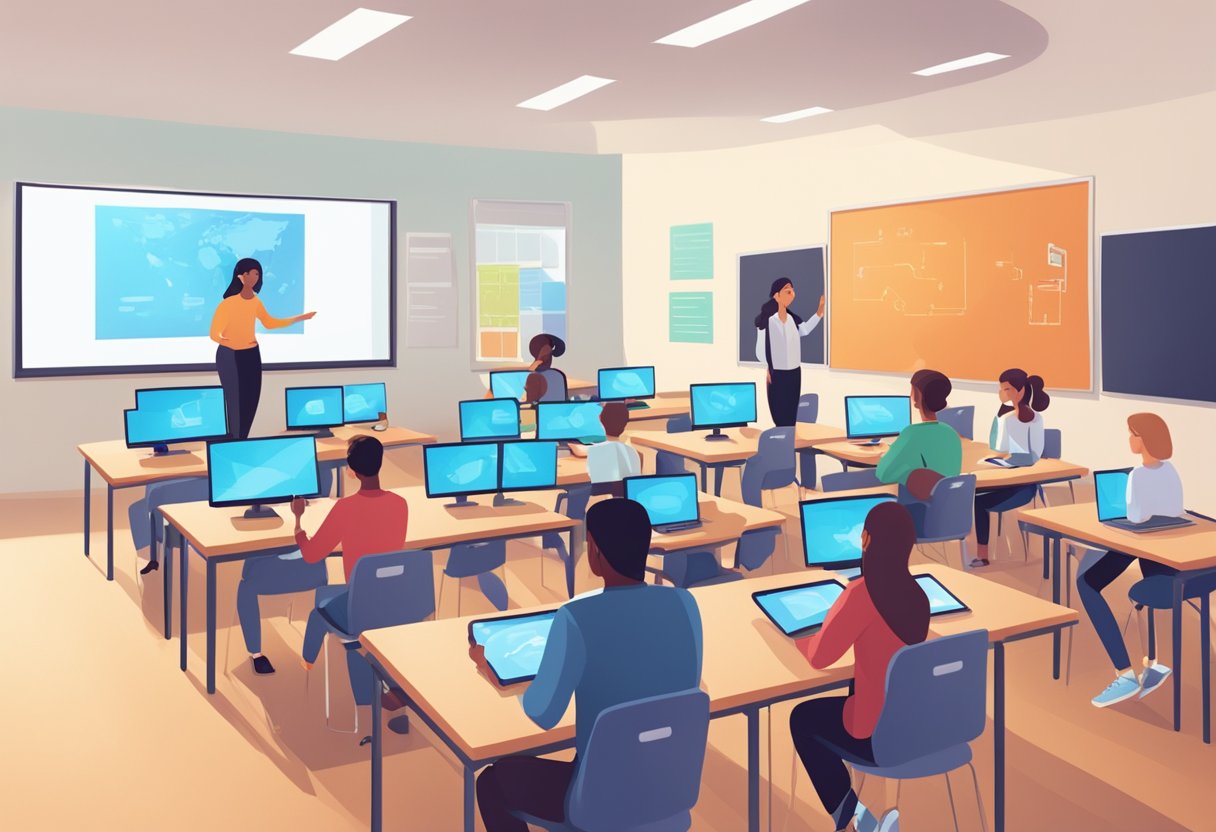
Technology integration in educational settings has dramatic effects on learning skills, especially critical thinking and problem-solving, as well as fostering creativity and innovation.
Critical Thinking and Problem-Solving
With technology’s influence, your ability to analyse information has transformed. Online resources, simulations, and interactive activities from platforms like LearningMole engage you in problem-solving by presenting real-world scenarios. For instance, engaging with digital tools that teach programming can enhance your logical thinking. Michelle Connolly, a veteran educational consultant, suggests, “Utilising tech-based problems allows students to develop the perseverance needed to tackle complex challenges.”
Fostering Creativity and Innovation
Digital technologies open the door to boundless creativity. Tools such as digital art software encourage creative expression and design thinking. As you explore these platforms, your creativity is not just about producing art; it’s about thinking outside the box and approaching problems innovatively. Connolly notes, “Creativity in education isn’t confined to art; it’s a critical aspect of innovating and creating solutions across all subjects.”
Collaborative Learning in the Digital Age
In modern education, digital technology opens doors to groundbreaking methods of collaborative learning. These allow students to engage with peers across the globe while developing vital teamwork and communication skills.

Building Teamwork through ICT
Information and Communication Technology (ICT) is the bedrock upon which effective collaborative learning is built. By integrating technologies like social media platforms, educational apps, and online forums, students can work together on projects, share ideas, and provide feedback in real-time. This harnesses the strength of group dynamics to foster a deeper understanding and retention of subject material. ICT tools enable students to break geographical barriers and collaborate in a virtual workspace where creativity and innovation can flourish.
- Digital Tools for Collaboration:
- Forums and message boards for idea-sharing
- Shared document platforms for real-time editing
- Project management software to track progress
Michelle Connolly, founder of LearningMole, asserts, “ICT is not just about the latest gadgets; it’s about making connections that enrich learning experiences.”
Global Communication Channels
Collaborative learning in the digital age is further enhanced by the myriad of global communication channels at students’ disposal. With video conferencing tools and virtual classroom software, you can connect with international peers as if they were sitting next to you.
Programs that offer real-time translation services help to overcome language barriers, facilitating global collaboration. As students engage with diverse cultures and perspectives, they expand their knowledge base and enhance their cross-cultural communication skills.
- Communication Platforms:
- Video conferencing for virtual face-to-face discussions
- Instant messaging for quick and efficient communication
- Email and collaborative platforms for structured dialogue
“Digital age communication tools have transformed the traditional classroom into a borderless learning community,” says Michelle Connolly, an educational consultant with over a decade and a half of hands-on classroom experience.
Personalised Learning Environments

In personalised learning environments, you’re at the centre of your own education, experiencing tailored instruction that recognises and adapts to your unique learning needs and preferences.
Adaptive Resources for Individual Needs
Adaptive resources are key components in personalised learning. These resources adjust in real-time, responding to your performance and engagement levels. For example, an interactive tutorial that responds to your quiz responses by offering harder questions if you’re excelling or further explanation if you’re struggling ensures that your learning experience is calibrated to your specific needs, as Michelle Connolly, an educational consultant with vast classroom experience, notes: “Adaptive resources are not just about answering right or wrong; they reveal the ‘why’ behind every student’s thought process.”
Supporting Diverse Learning Pathways
Personalised learning environments embrace inclusive education by supporting diverse learning pathways. Differentiated instruction plays a crucial role here, where teaching strategies are varied to accommodate different learning styles. Take, for instance, the choice of engaging in a group project or a solo research task; this variety allows you to explore and absorb knowledge in the way that suits you best. In the words of Michelle Connolly, “Education should be like a tailor-made suit, the perfect fit for each student’s learning journey.”
Challenges and Solutions in EdTech

Certain challenges stand out in educational technology, particularly those related to safeguarding student privacy and ensuring equitable access. Let’s explore how these can be addressed responsibly.
Addressing Privacy and Security
When you introduce technology in the classroom, you increase the risk of privacy breaches and cyberattacks. Protecting students’ data is paramount. “It’s essential to implement robust security measures, such as encryption and secure passwords, and to ensure that all EdTech products comply with privacy laws,” advises Michelle Connolly, a stalwart in the educational field. Teachers and educators should make a concerted effort to educate themselves and their students on good cybersecurity practices.
Mitigating Digital Divide and Biases
Another critical issue is the digital divide. Not all students have equal access to technology, which can exacerbate existing educational inequalities. It is vital to address this by seeking solutions that provide access to all students, like subsidised technology programs or low-cost internet access schemes.
Furthermore, educators should be wary of inherent biases in educational software that could disadvantage certain groups. Teachers must critically assess the tools they use to ensure they support inclusive and equitable learning. Michelle Connolly remarks, “Understanding and overcoming these biases in educational content is not just an option; it’s a necessity to provide fair education for everyone.”
Assistive Educational Technologies
Assistive educational technologies have revolutionised the way students with disabilities and multilingual learners engage with curriculum content. These technologies foster personalised learning experiences, ensuring all students have the tools to succeed academically.
Supporting Special Needs Education
For students with disabilities, educational software provides accessible learning platforms and tailored resources. Interactive tools such as text-to-speech and voice recognition software enable students to overcome barriers to learning. As Michelle Connolly, a renowned educational consultant with 16 years of classroom experience, states, “By integrating assistive technologies in the classroom, we’re not just teaching; we’re unlocking the potential of every student.”
- Text-to-Speech Software: Converts written text into audible speech, aiding students with reading difficulties.
- Voice Recognition: Allows students to dictate text and navigate computers through voice commands, aiding those with motor skills challenges.
Tools for Multilingual Learners
Assistive technologies are equally pivotal for multilingual learners. These tools help bridge language gaps, allowing students to grasp complex concepts in their second language.
- Translation Software: Helps students understand instructional content in their native language.
- Language Learning Applications: Provide interactive exercises and real-time feedback, aiding language acquisition.
Each innovation in educational technology opens a new avenue for inclusive learning, embodying the commitment to meet the diverse needs of all students.
The Relationship Between Technology and Academic Performance
When you consider integrating technology into the classroom, it’s critical to understand how it can impact academic performance and to find the right balance for its use.
Evaluating the Effect of Tech on Learning Outcomes
Research has consistently shown that technology can enhance learning outcomes when used appropriately. A meta-analysis of the literature indicates that the effect size—a measure of the impact—of technology on student achievement can be positive. However, this is contingent upon factors such as the type of technology used, the subject matter, and how the technology complements traditional teaching methods. Interactive software and diagnostic tools can provide immediate feedback, allowing for a more personalised learning experience and the potential for improved academic performance.
Balancing Tech Use with Traditional Methods
While the benefits are clear, it is necessary to balance technology use and traditional teaching methods. Michelle Connolly, the founder of LearningMole, with extensive classroom experience, advocates for a blended approach: “Technology should be used as a tool to support learning, not replace timeless teaching methods that we know work well.”
Implementing technology should always aim to support and enhance critical thinking, creativity, and problem-solving skills within the curriculum, ensuring students are not solely reliant on digital platforms for their educational achievements. Remember, it’s about using tech as a lever to unlock potential, not as a crutch that makes learning too automated.
Future Directions in Education Technology

As we explore the impact of evolving technologies in the educational sphere, it’s important to consider not only how they affect current practices but also their potential to shape future learning environments.
Emerging AI Technologies in Classrooms
With generative AI making strides, classrooms are poised to undergo a transformation. AI + Education initiatives are integrating tools like chatbots and virtual tutors, enhancing personalised learning experiences for students. Michelle Connolly, an educational consultant, says, “AI is revolutionising the way we can tailor education to the needs of individual learners, ensuring that no child is left behind.”
Sustainable and Ecological TeachTech
The ethos of sustainability resonates deeply within TeachTech as the industry aligns itself with global efforts to combat climate change. Solutions are being crafted to reduce electronic waste and energy consumption, aiming for a greener future within education technology. Engaging with platforms like LearningMole, educators are provided with resources that teach sustainability and embody it in their design and delivery.
Frequently Asked Questions
Exploring the link between technology and education can uncover how digital tools affect student attention and learning. The questions below address common inquiries and highlight current findings on this topic.
How does the use of technology in classrooms influence the attention spans of students?
“Technology, when integrated thoughtfully, can sustain a student’s focus during lessons,” explains Michelle Connolly, an educational consultant with vast classroom experience. However, it’s important that it’s used as a complement to teaching rather than a constant feature, as overexposure may cause distractions.
In what ways can technology both enhance and hinder the learning process for students?
Technology can offer interactive and personalised learning experiences that boost student engagement. On the flip side, Michelle Connolly, who brings 16 years of classroom experience, cautions that improper use or overreliance on technology can lead to passive learning or distractions that impede student progress.
What are the notable effects of technology on student engagement and information retention?
Interactive technology can result in increased student engagement and help with information retention by making learning material more relatable. “Tools like educational apps make learning active rather than passive, which is crucial for memory,” Michelle Connolly, a dedicated educator, points out.
How does the integration of technology in educational settings affect students’ ability to concentrate?
Done right, technology can focus attention on key learning concepts and offer differentiated instruction. Michelle Connolly, founder of LearningMole, emphasises that “the clever use of technology tailors the learning experience to individual student needs, aiding concentration.”
Are there strategies that can maximise the benefits of technology in education while minimising potential distractions?
Yes, effective strategies include setting clear objectives for technology use, incorporating it into lesson plans selectively, and teaching students digital literacy skills. “Maintaining a balance is key,” states Michelle Connolly, whose expertise reflects her deep understanding of educational technology’s role.
What does current research suggest about the balance between technological advancements and traditional learning methods regarding student outcomes?
Current research supports a balanced approach that leverages the strengths of both. With her extensive education background, Michelle Connolly endorses this, adding, “Combining traditional methods with technological tools can enhance learning outcomes by catering to various learning styles.”
<p>The post The Impact of Technology on Student Attention and Learning: Navigating the Effects in Modern Classrooms first appeared on LearningMole.</p>





